Book Panditji for Rath Yatra Puja – Complete Service Guide
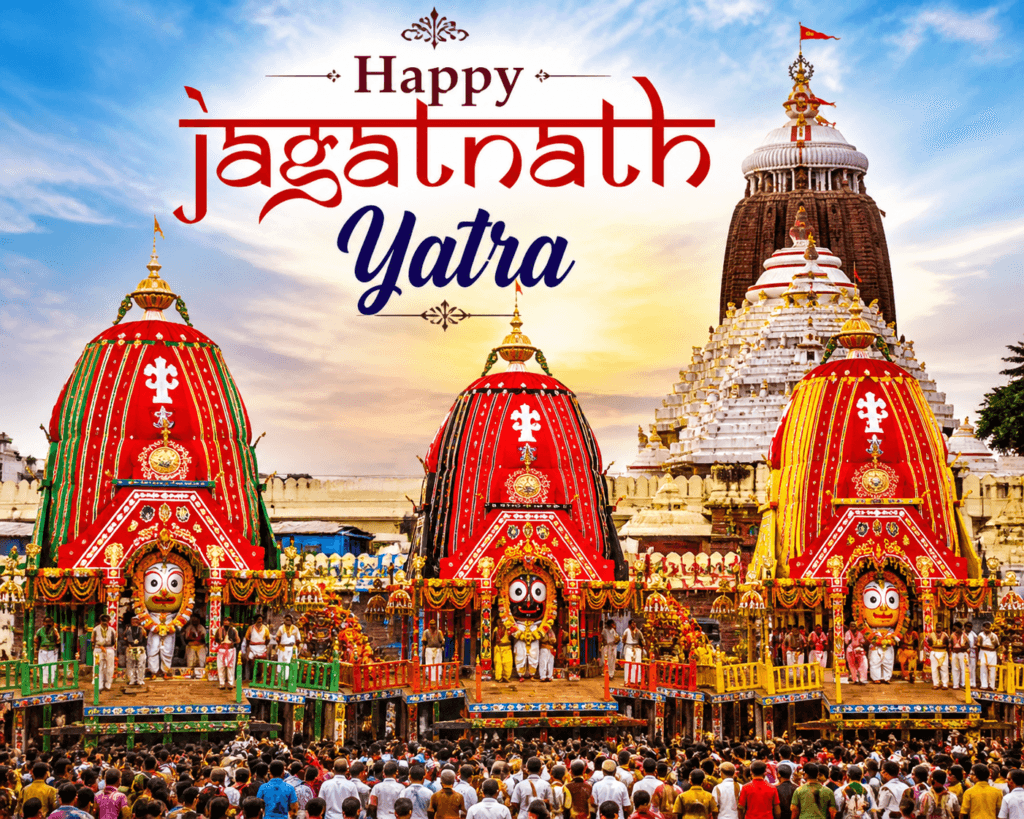
Planning a sacred Jagannath celebration at home or in your society can feel overwhelming without proper guidance. Many families struggle to find a reliable priest who understands rituals and traditions. This is where Book Panditji for Rath Yatra Puja becomes essential. With the right support, you can perform every ritual correctly and peacefully.
When you, you ensure that all ceremonies are conducted with proper Vedic mantras and traditions. Whether you are in Ahmedabad, Puri Odisha, or any city across India, professional pandit services make the process smooth and stress-free. Choosing to Book Panditji for Rath Yatra Puja also saves time and gives you confidence that everything will be done properly.
What is Jagatnath Rath Yatra?
Jagannath Rath Yatra is one of the most sacred Hindu festivals, dedicated to Lord Jagannath, Balabhadra, and Subhadra. Devotees celebrate this festival by taking idols in a chariot procession and performing puja with devotion.
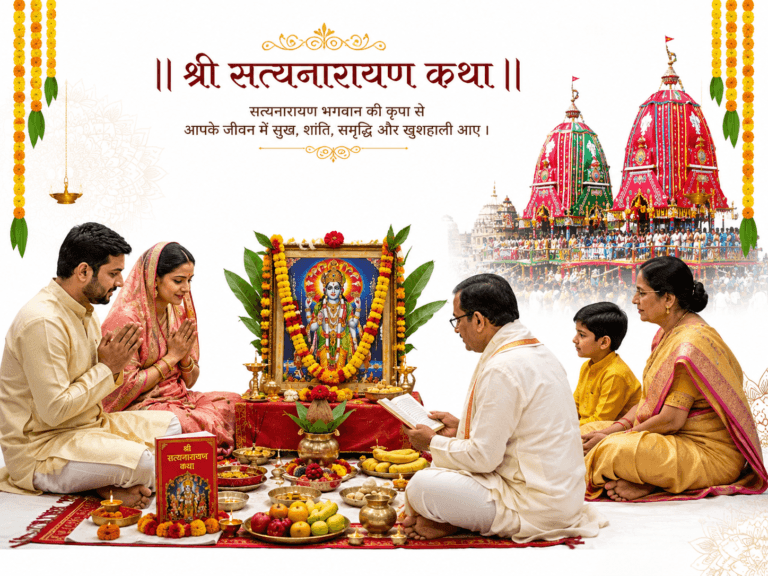
When you Book Panditji for Rath Yatra Puja, you bring traditional rituals into your home or community celebration. Many families now prefer to ensure correct rituals. A professional Jagannath puja pandit service helps maintain authenticity and spiritual value.
Our Rath Yatra Puja Process
When you Book Panditji for Rath Yatra Puja, we follow a structured and transparent process:
Step 1: Requirement Understanding
We understand your needs home puja, society event, or temple celebration.
Step 2: Pandit Selection
We assign an experienced panditji for Jagannath Rath Yatra based on language and tradition.
Step 3: Muhurat & Planning
We guide you on the best timing and rituals.
Step 4: Puja Setup
Complete setup including samagri guidance.
Step 5: Ritual Execution
Pandit performs Ganesh puja, Jagannath puja, bhajan, and aarti.
Step 6: Completion & Blessings
Prasad distribution and final blessings.
This structured approach makes online pandit booking for festival puja easy and reliable.
Jagannath Rath Yatra History – Origin, Story & Cultural Significance
1. Journey to Gundicha Temple
One of the main beliefs is that Lord Jagannath travels to the Gundicha Temple, which is considered the home of his aunt. This journey represents family bonding and divine love.
2. Krishna’s Desire to Visit Vrindavan
Another story says that Lord Krishna wished to revisit Vrindavan, the place of his childhood. Rath Yatra symbolizes this emotional journey.
3. Subhadra’s Wish to See the City
It is believed that Subhadra wanted to explore the city, and her brothers accompanied her on chariots, leading to the tradition of Rath Yatra.
🏛️ Historical Development
The modern celebration of Rath Yatra began after the construction of the Jagannath Temple in Puri during the 12th century by King Anantavarman Chodaganga Deva.
Since then:
- The festival has been celebrated every year
- Kings and rulers supported its growth
- Devotees from all over India started participating
Jagannath Rath Yatra History
The Jagannath Rath Yatra is one of India’s most sacred and grand festivals, celebrated with deep devotion in Puri, Odisha. This divine journey of Lord Jagannath, along with Balabhadra and Subhadra, reflects love, equality, and spiritual connection. During this holy occasion, many devotees also prefer to perform rituals at home, and following the 7 Step Book Panditji for Rath Yatra Puja process ensures that all traditions are performed correctly with proper guidance.
Step 1: Mythological Origin of Rath Yatra
The history of Rath Yatra comes from ancient scriptures like the Skanda Purana and Brahma Purana. King Indradyumna, a great devotee of Lord Vishnu, established the Jagannath Temple. The wooden idols of the deities symbolize the universal form of God. Even today, devotees celebrate this tradition and follow the 7 Step Book Panditji for Rath Yatra Puja method to perform rituals properly at home.
Step 2: Why Lord Jagannath Comes Out
Lord Jagannath comes out of the temple once a year to bless all devotees, especially those who cannot enter the temple. This makes Rath Yatra a festival of equality. To experience this divine blessing at home, many families follow the 7 Step Book Panditji for Rath Yatra Puja approach for a smooth and authentic पूजा experience.
Step 3: Unique Wooden Idols Tradition
The idols of Lord Jagannath are made of sacred wood and contain a divine element called “Daru Brahma.” The Nabakalebara ritual replaces idols every 12–19 years. During such sacred times, devotees ensure proper rituals by using the 7 Step Book Panditji for Rath Yatra Puja process for accurate विधि-विधान.
Step 4: Construction of Rath (Chariots)
Three grand chariots Nandighosha, Taladhwaja, and Darpadalana are built every year with traditional methods. This preparation itself is considered sacred. Similarly, organizing puja at home becomes easy and structured when you follow the 7 Step Book Panditji for Rath Yatra Puja steps for proper planning.
Step 5: Grand Rath Yatra Procession
The main event begins with the Pahandi ritual, where deities are brought out and placed on chariots. Devotees pull the chariots with devotion, believing it brings blessings. At the same time, those celebrating at home can connect spiritually by following the 7 Step Book Panditji for Rath Yatra Puja method.
Step 6: Stay at Gundicha Temple
The deities stay at Gundicha Temple for seven days, symbolizing a divine visit. Devotees offer prayers and seek blessings. Many households also perform special pujas during this time by using the 7 Step Book Panditji for Rath Yatra Puja process to maintain spiritual discipline.
Step 7: Bahuda Yatra
The return journey marks the completion of Rath Yatra. Devotees again participate with devotion and joy. Completing your home rituals with the 7 Step Book Panditji for Rath Yatra Puja ensures you receive full spiritual benefits of this sacred festival.
🚩 The Three Chariots (Rath)
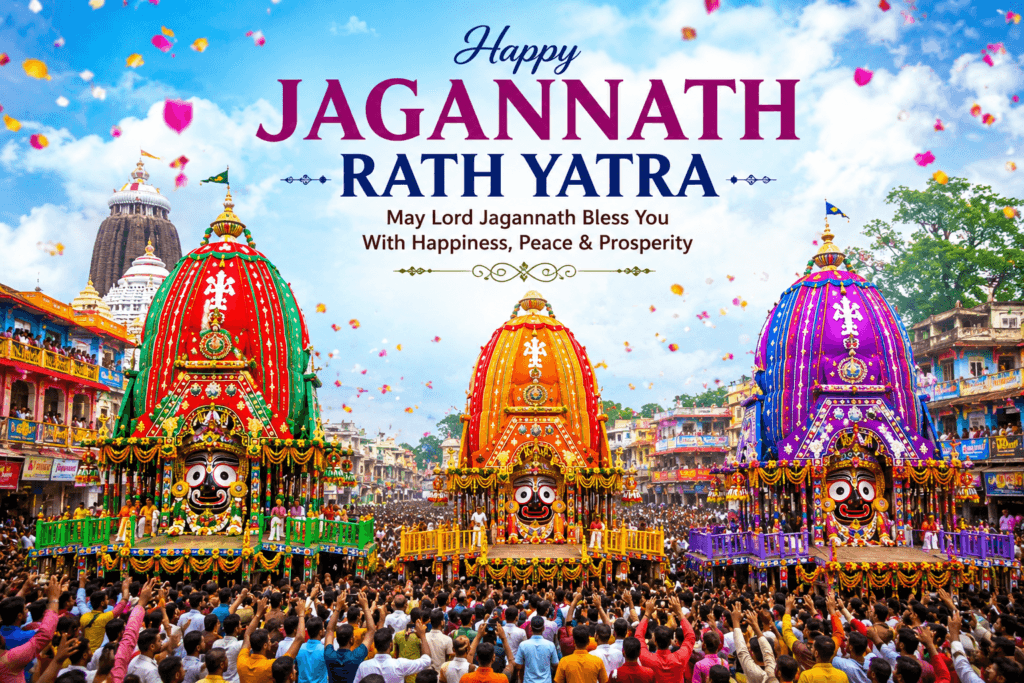
A key highlight of Rath Yatra is the construction of three grand chariots:
- Nandighosha – for Lord Jagannath
- Taladhwaja – for Balabhadra
- Darpadalana – for Subhadra
These chariots are:
- Built every year from scratch
- Made using sacred wood
- Decorated with colorful fabrics and carvings
The building of chariots itself is a sacred ritual.
The Jagannath Rath Yatra is one of the most spiritually powerful festivals in Hindu culture, symbolizing the divine journey of Lord Jagannath, along with his siblings Balabhadra and Subhadra.7 Step Book Panditji for Rath Yatra Puja While its origin lies in Puri, Odisha, the essence of this sacred festival has traveled far beyond one city, touching hearts across India and the world. 7 Step Book Panditji for Rath Yatra Puja What makes Rath Yatra unique is its message God comes out of the temple to meet every devotee, without discrimination. This spiritual idea is beautifully reflected in how different cities celebrate the festival in their own way while preserving its core values.
Puri, Odisha – The Spiritual Heart of Rath Yatra
Puri is the birthplace of Jagannath Rath Yatra and holds the deepest spiritual importance. Every year, lakhs of devotees gather to witness the grand procession where the deities are taken out of the Jagannath Temple and placed on massive wooden chariots. The act of pulling the chariot is not just symbolic—it represents surrender to divine will. Devotees believe that even a glimpse of Lord Jagannath during this time can cleanse sins and bring spiritual liberation. The atmosphere in Puri is filled with chants, devotion, and a sense of unity that transcends social boundaries.
Ahmedabad, Gujarat – Devotion Meets Community Spirit
Ahmedabad hosts one of the largest Rath Yatra celebrations after Puri.7 Step Book Panditji for Rath Yatra Puja Here, the festival becomes a blend of devotion and community participation. The chariot procession moves through the city with great discipline and enthusiasm. Devotees sing bhajans, offer prayers, and engage in seva such as food distribution. The spiritual message in Ahmedabad is clear devotion is not limited to rituals; it is also expressed through service and compassion.
Mumbai, Maharashtra – Faith in the Midst of Modern Life
In a city known for its fast pace, the celebration of Jagannath Rath Yatra offers a moment of spiritual pause. Temples and spiritual organizations, especially ISKCON, organize Rath Yatra events where devotees gather for kirtan, prayers, and chariot pulling.7 Step Book Panditji for Rath Yatra Puja The festival in Mumbai highlights how spirituality can exist even in a busy urban environment. It reminds people to reconnect with faith and inner peace despite daily challenges.
Delhi – A Celebration of Unity in Diversity
In the capital city, Rath Yatra becomes a symbol of India’s cultural and spiritual diversity. People from different regions come together to celebrate, bringing their own traditions and styles. The festival includes devotional singing, cultural performances7 Step Book Panditji for Rath Yatra Puja and rituals that reflect unity. Spiritually, Delhi’s Rath Yatra shows that devotion has no boundaries language, region, and background do not matter when it comes to connecting with the divine.
Kolkata, West Bengal – Tradition and Bhakti Together
Kolkata celebrates Rath Yatra with deep-rooted traditions and emotional devotion. Many neighborhoods organize their own chariots, and families participate with great श्रद्धा. The focus here is on maintaining customs passed down through generations. The spiritual essence lies in pure bhakti (devotion), where rituals are performed with sincerity and love for the Lord.
Global Cities – Spreading Spirituality Worldwide
Jagannath Rath Yatra has crossed international borders and is now celebrated in cities like London, New York, Sydney, and Toronto. These celebrations are often organized by ISKCON and attract people from different cultures and religions. The sight of chariots moving through international streets is a powerful symbol of India’s spiritual heritage. The message here is universal—God belongs to everyone, and devotion connects all humanity.
The Deeper Spiritual Meaning
Across all cities, the spiritual message of Jagannath Rath Yatra remains the same. It teaches that:
- The divine is accessible to everyone
- True devotion comes from the heart, not just rituals
- Serving others is a form of worship
- Unity and equality are essential spiritual values
The journey of the chariot represents life itself, where devotees move forward with faith, pulling their connection with God closer. It is a reminder that spirituality is not confined to temples—it lives in actions, thoughts, and intentions.
Human Connection and Emotional Value
What makes Rath Yatra truly special is the emotional connection people feel during the festival. Families come together, communities celebrate as one, and even strangers share moments of joy and devotion. The sound of chants, the sight of decorated chariots, and the collective energy create an atmosphere that touches the soul. It is not just a religious event—it is a human experience filled with faith, hope, and positivity.
The religious history of Jagannath Rath Yatra is deeply rooted in ancient Hindu traditions, sacred texts, and timeless devotion. This grand festival is primarily associated with Lord Jagannath, a divine form of Lord Vishnu/Krishna, worshipped in the holy city of Puri, Odisha. The origins of this sacred yatra can be traced back to scriptures like the Skanda Purana, Brahma Purana, and Padma Purana, where the glory of Lord Jagannath and his annual journey is described in detail.
According to religious belief, the story begins with King Indradyumna, a devoted follower of Lord Vishnu. He desired to build a magnificent temple dedicated to the Lord. With divine blessings, he established the Jagannath Temple in Puri. However, the most unique aspect of this temple is the wooden idols of Lord Jagannath, Balabhadra, and Subhadra, which differ from the usual stone or metal idols found in other temples. These idols are believed to contain a mysterious divine element known as “Daru Brahma,” symbolizing the eternal presence of God.
The Rath Yatra itself represents a significant religious event where the deities leave their sanctum and travel to the Gundicha Temple, which is considered their maternal aunt’s home. This journey is not just physical but deeply symbolic. It signifies the idea that God steps out to meet devotees, especially those who are unable to enter the temple. This reflects a powerful religious message of inclusivity and equality, where every individual, regardless of background, has the right to receive divine blessings.
Another important religious aspect of Jagannath tradition is the ritual of Nabakalebara, which takes place every 12 to 19 years. During this sacred ceremony, the old wooden idols are replaced with new ones made from specially selected neem trees. The divine soul or “Daru Brahma” is transferred from the old idols to the new ones in a secret ritual performed by temple priests. This process represents rebirth and the eternal cycle of life and death, reinforcing deep spiritual beliefs.
The construction of the chariots for Rath Yatra also holds religious importance. Every year, three massive chariots are built anew using traditional methods and sacred wood. Each chariot is associated with a specific deity and follows strict scriptural guidelines. The act of pulling the chariots by devotees is considered highly auspicious. It is believed that participating in this act can wash away sins and bring spiritual merit.
Rath Yatra is also closely linked to the life of Lord Krishna, particularly his desire to visit Vrindavan and meet his devotees. Some traditions interpret the journey as Krishna’s longing to reunite with his devotees, symbolizing divine love and compassion.
In essence, the religious history of Jagannath Rath Yatra is a beautiful blend of mythology, devotion, and spiritual philosophy. It teaches that God is not distant but deeply connected to humanity. The festival continues to inspire millions by spreading messages of faith, unity, and unconditional devotion, making it one of the most spiritually enriching celebrations in the world
The religious history of Jagannath Rath Yatra is deeply rooted in ancient Hindu traditions and reflects centuries of devotion, faith, and spiritual belief. This sacred festival is dedicated to Lord Jagannath, a revered form of Lord Vishnu or Krishna, and is primarily celebrated in Puri, Odisha. The significance of this divine event is mentioned in important scriptures like the Skanda Purana, Brahma Purana, and Narada Purana, which describe the spiritual importance of Lord Jagannath and his annual journey to bless devotees. For devotees who wish to celebrate this occasion at home, following the 7 Step Book Panditji for Rath Yatra Puja ensures that all rituals are performed correctly and with devotion.
The origin of this tradition is closely linked to King Indradyumna, a devoted and righteous ruler who wished to witness Lord Vishnu in a unique divine form. According to sacred legends, he received divine instructions to construct a grand temple in Puri. With deep devotion and dedication, the temple was built, and the idols of Lord Jagannath, Balabhadra, and Subhadra were carved from sacred wood. Unlike traditional stone or metal idols, these wooden forms represent the infinite and universal nature of God, beyond physical limitations. The presence of the divine essence known as “Daru Brahma” within these idols is believed to carry the eternal soul of the Lord. Many devotees today connect with this tradition by following the 7 Step Book Panditji for Rath Yatra Puja to maintain authenticity in rituals.
One of the most powerful spiritual messages of Jagannath Rath Yatra is the idea that God is accessible to everyone. In earlier times, temple entry was limited for certain communities, but this festival changed that belief. During Rath Yatra, the Lord himself comes out of the temple to give darshan to all devotees, regardless of caste, status, or background. This act represents equality, compassion, and universal love, making the festival a symbol of social harmony and spiritual unity. To experience this divine connection at home, many families prefer the 7 Step Book Panditji for Rath Yatra Puja for a guided and peaceful पूजा experience.
The Rath Yatra marks the sacred journey of the deities from the Jagannath Temple to the Gundicha Temple, which is believed to be their aunt’s residence. This journey is not just a physical movement but a deeply symbolic event representing divine connection with devotees. The idols are brought out in a ritual called Pahandi, accompanied by devotional chants and celebrations, and are then placed on beautifully decorated chariots. Devotees from across the country gather to pull these chariots, believing that participating in this act brings spiritual blessings and removes negative karma. Similarly, organizing rituals at home becomes easier and more meaningful with the 7 Step Book Panditji for Rath Yatra Puja process.
Another important tradition associated with Jagannath culture is Nabakalebara, a sacred ritual that takes place every 12 to 19 years. During this ceremony, the old idols are respectfully replaced with new ones made from specially selected neem trees. The mysterious transfer of the “Daru Brahma” from the old idols to the new ones is performed in secrecy by temple priests. This ritual represents the cycle of life, death, and rebirth, highlighting deep philosophical beliefs about the immortality of the soul. During such sacred occasions, devotees ensure proper rituals by choosing the 7 Step Book Panditji for Rath Yatra Puja for accurate and traditional विधि-विधान.
The festival is also spiritually connected to the life of Lord Krishna, especially his desire to reunite with his devotees in Vrindavan. Rath Yatra is often seen as a divine expression of love, where God moves closer to his devotees, reminding them of his presence and compassion.
Over time, the Jagannath Rath Yatra has grown into a global celebration, observed in many countries while maintaining its original spiritual essence. Despite its expansion, the core message remains unchanged—true devotion lies in faith, surrender, and selfless service. This sacred festival continues to inspire millions, teaching that God’s blessings are for everyone and that spirituality connects all of humanity.
Why Choose Us for Rath Yatra Puja?
When you Book Panditji for Rath Yatra Puja with us, you get:
- ✔️ Experienced and verified pandits
- ✔️ Strong presence in Ahmedabad, Puri Odisha & all cities
- ✔️ Easy Rath Yatra pandit booking process
- ✔️ Transparent pricing
- ✔️ Customer-first support
We focus on quality and authenticity, ensuring every ritual is performed correctly.
Benefits of Our Rath Yatra Puja Service
Choosing to Book Panditji for Rath Yatra Puja offers multiple benefits:
- Spiritual peace and positivity
- Proper Vedic rituals and guidance
- Stress-free festival celebration
- Time-saving and organized process
- Suitable for home and community events
Our Jagannath puja pandit service ensures you experience the true essence of the festival.
Industries We Serve
We provide services for:
- Home puja (family rituals)
- Society and community events
- Temple celebrations
- Cultural organizations
- Corporate spiritual events
Whether you want to hire pandit for Rath Yatra at home or large events, we support all needs.
Common Challenges We Solve
Many people face issues like:
- Finding reliable panditji
- Lack of ritual knowledge
- Time management problems
- Last-minute booking stress
With Book Panditji for Rath Yatra Puja, we solve these problems by providing expert guidance and quick service.
Get Started – Book Your Pandit Today
Celebrate Rath Yatra with devotion and peace. Don’t wait for last-minute arrangements.
today and ensure a smooth, spiritual, and memorable experience.
Our team is ready to help you with , whether for home puja or large celebrations. Choose a trusted Jagannath puja pandit service and bring divine blessings to your home.
👉 Take the first step now and with confidence.