Role
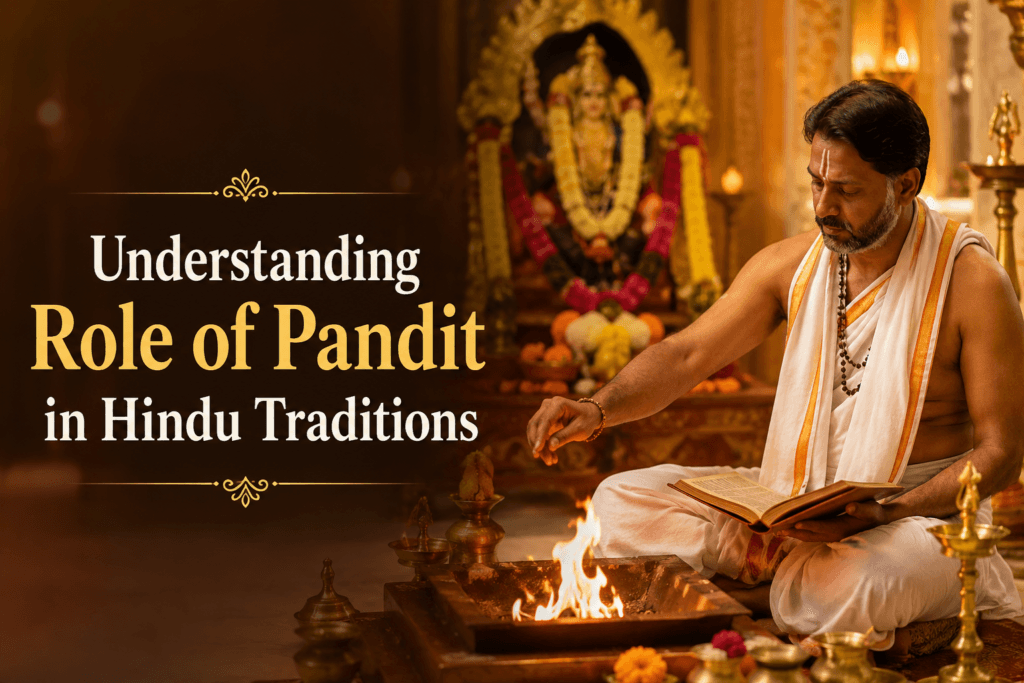
Understanding the Role of a Pandit in Hindu Traditions is very important . Hinduism is one of the world’s oldest living religions and role of pandit in hindu traditions is connected with traditions, rituals, festivals, and spiritual practices that have been followed for thousands of years. Whether it’s a simple daily prayer at home or a grand ceremony like a wedding, housewarming, or Satyanarayan Katha, one question often comes to mind:
Do you really need a pandit for every puja?
In today’s fast-paced world, many families wonder whether they can perform religious rituals themselves by watching online videos or reading guides. Others believe that every Hindu ritual must be conducted by a qualified priest to receive its full spiritual benefits.
So, what is the truth?
The answer isn’t simply “yes” or “no.” It depends on the purpose of the puja, the complexity of the rituals, and your understanding of the traditions involved.
Let’s explore the role of a pandit, the importance of rituals, and when expert guidance truly matters.
What Is the Purpose of a Puja?
Before deciding whether a pandit is necessary, it’s important to understand why pujas are performed in the first place.
A puja is much more than lighting a diya or offering flowers to a deity. It is an act of devotion that creates a connection between the devotee and the divine. Every offering, mantra, and ritual carries symbolic meaning intended to cultivate gratitude, discipline, inner peace, and spiritual awareness.
People perform pujas for many reasons, including:
- Seeking blessings before beginning something new
- Expressing gratitude to God
- Celebrating festivals
- Marking important milestones like marriage or a new home
- Praying for health, prosperity, or success
- Honoring ancestors
- Removing obstacles and negative influences
While faith is the foundation of every puja, the rituals themselves often follow traditions preserved through generations.
Who Is a Pandit?
A pandit is not simply someone who chants Sanskrit mantras.
Traditionally, a pandit is a person who has spent years studying Hindu scriptures such as the Vedas, Upanishads, Puranas, Smritis, and various ritual manuals. Along with learning sacred texts, they are trained in pronunciation, rituals, symbolism, and the significance behind every ceremony.
An experienced pandit understands:
- Which mantras should be chanted for different occasions
- The correct sequence of rituals
- Auspicious timings (Muhurat)
- Regional customs and traditions
- The meaning behind every offering
- How to conduct ceremonies according to different sampradayas (traditions)
Their role is not merely to perform rituals but to guide families through important spiritual occasions with authenticity and respect.
Why Were Pandits Traditionally Needed?
In ancient India, religious education was not widely available to everyone.
Advanced
Sacred scriptures were preserved through oral traditions and passed down by gurus to dedicated students. Sanskrit, the language of many scriptures, required years of disciplined study to understand and pronounce correctly.
Most families relied on learned priests because:
- Scriptures were difficult to access.
- Rituals were highly detailed.
- Correct pronunciation was considered important.
- Every ceremony involved specific procedures.
- Guidance ensured traditions were preserved accurately.
The pandit became the bridge between scriptural knowledge and everyday life.
Even today, many of these rituals remain intricate, making trained guidance valuable for major ceremonies.
Has the Need for Pandits Changed Today?
The modern world has changed how people learn about religion.
Today, anyone can search for puja videos, download PDFs, read translations of scriptures, or attend virtual satsangs. This easy access to information has encouraged many devotees to perform simple prayers independently.
This raises an important question:
If information is available online, why involve a pandit at all?
The answer lies in understanding the difference between knowing the steps and understanding the tradition.
Reading a recipe and preparing a festive meal are two different experiences. Likewise, watching a five-minute tutorial cannot replace years of scriptural learning and practical experience.
A knowledgeable pandit doesn’t just recite mantras—they explain their purpose, ensure the ritual flows correctly, answer questions, and adapt ceremonies according to family traditions and regional customs.
Their guidance often brings clarity and confidence to families who want to perform rituals respectfully.
Is Faith More Important Than Ritual?
One of the most beautiful teachings in Hindu philosophy is that devotion (Bhakti) holds immense value.
Many scriptures emphasize that sincere faith is essential in worship.
If someone offers a flower, water, or even a heartfelt prayer with genuine devotion, it is considered spiritually meaningful.
This teaches us an important lesson:
God values sincerity more than external perfection.
However, this doesn’t mean rituals are meaningless.
Traditional rituals help create discipline, focus, and a sacred atmosphere. They preserve cultural heritage and ensure that ceremonies are performed with consistency across generations.
Faith and rituals are not competitors—they complement each other.
Devotion gives rituals their heart, while rituals provide devotion with structure.
The Real Question Isn’t “Do I Need a Pandit?”
Instead of asking,
“Do I need a pandit for every puja?”
a better question is:
“What type of puja am I performing, and how much guidance does it require?”
Some rituals are simple enough to perform with basic understanding and sincere devotion.
Others involve detailed procedures, Vedic chanting, specific offerings, fire rituals, or auspicious timings that benefit from the presence of an experienced pandit.
Understanding this difference helps families make informed decisions while respecting both tradition and practicality.
give me ideas on which i can post a blog on panditjee online abt around topics shld be eye catchy and brand awareness
For Panditjee Online, your blog strategy should not only target SEO but also build trust, educate users, and increase bookings. Focus on topics that answer real questions people search before booking a pandit online.
Here are 40 eye-catching blog ideas:
Festivals & Religious Knowledge
- 7 Powerful Benefits of Booking a Pandit Online Instead of Searching Offline
- Why Every Hindu Family Should Perform Satyanarayan Katha at Least Once a Year
- 11 Important Pujas Every New Home Needs Before Moving In
- The Real Meaning Behind Every Hindu Festival You Celebrate
- Why Is Ganesh Puja Performed Before Every Auspicious Occasion?
- Shravan Month: The Most Powerful Pujas to Perform for Lord Shiva
- Why Raksha Bandhan Is More Than Just a Festival
- The Spiritual Science Behind Navratri Rituals
- Janmashtami Puja at Home: Complete Step-by-Step Guide
- Diwali Lakshmi Puja Mistakes That Can Affect Prosperity
Myth-Busting Blogs
- Do You Really Need a Pandit for Every Puja? Here’s the Truth
- 5 Common Myths About Online Pandit Booking
- Can Puja Be Performed Without Understanding Sanskrit?
- Is Muhurat Really Important? What the Scriptures Say
- Online vs Offline Pandit Booking: Which One Is Better?
Home & Family
- 8 Signs It’s Time to Perform Vastu Shanti Puja
- Why Every New Business Should Begin with Ganesh Puja
- How Grah Pravesh Puja Brings Positive Energy to Your New Home
- Best Hindu Rituals to Perform After Buying a New Vehicle
- Why Families Perform Pitru Shradh Every Year
Wedding & Relationship
- Essential Wedding Rituals and Their Hidden Meaning
- How Kundli Matching Actually Works
- Top Pre-Wedding Pujas Every Couple Should Know
- Why Ganesh Sthapana Is the First Wedding Ritual
- How Religious Rituals Strengthen Family Bonds
Educational & SEO
- Complete Guide to Satyanarayan Katha: Benefits, Vidhi & Samagri
- Everything You Need to Know About Rudrabhishek
- What Is Navagraha Shanti Puja and When Should You Perform It?
- Hanuman Chalisa Path Benefits You May Not Know
- Complete Guide to Mahamrityunjaya Jaap
Trending & Emotional
- What Happens Spiritually When You Perform Puja with Full Faith?
- The Hidden Power of Daily Prayers
- Why Modern Families Are Choosing Online Pandit Services
- How Ancient Rituals Fit Into Today’s Busy Lifestyle
- 5 Reasons Every Child Should Learn About Hindu Traditions
Brand Awareness Blogs
- Why Thousands of Families Trust Panditjee Online for Every Puja
- How Panditjee Online Makes Religious Services Simple
- From Booking to Blessings: How Panditjee Online Works
- Verified Pandits, Transparent Pricing & Easy Booking—Why It Matters
- Your One-Stop Destination for Every Hindu Puja: Panditjee Online
High-CTR Titles (Excellent for Traffic)
- 9 Puja Mistakes Most Families Make Without Realizing
- Don’t Book a Pandit Until You Read This
- 7 Powerful Pujas That Bring Peace, Prosperity & Success
- The Truth About Online Pandit Booking Nobody Talks About
- Why More Families Are Booking Pandits Online in 2026
- Complete Hindu Puja Calendar 2026: Never Miss an Auspicious Day
- 10 Signs You Should Perform Vastu Shanti Puja Immediately
- Which Puja Is Right for Your Current Life Situation?
- One Puja Can Change the Energy of Your Home—Here’s How
- How to Choose the Right Pandit for Your Puja
Evergreen Topics That Build Brand Authority
- Complete Puja Guides
- Festival Guides
- Muhurat & Panchang Articles
- Hindu Ritual Meanings
- Temple Stories
- Mantra Benefits
- Puja Samagri Checklists
- Vastu Tips
- Astrology & Kundli Basics
- Family Tradition & Culture
These topics are evergreen, highly searchable, and naturally position Panditjee Online as a trusted source while increasing organic traffic and brand awareness.
Do You Really Need a Pandit for Every Puja? Here’s the Truth give me lobg blog on this topic around 2500 words and give it in parts i dont have any issue
Absolutely. Since you’re targeting SEO and a long-form article, I’ll structure it into 4 detailed parts (around 600–700 words each) to reach approximately 2,500 words.
The blog will be:
- SEO-optimized
- Human-written (natural, not AI-sounding)
- Educational rather than promotional
- Suitable for Panditjee Online
- Include the focus keyword naturally
- End with a subtle CTA instead of sounding like an advertisement
We’ll start with Part 1.
Do You Really Need a Pandit for Every Puja? Here’s the Truth
Part 1: Understanding the Role of a Pandit in Hindu Traditions
Hinduism is one of the world’s oldest living religions, filled with traditions, rituals, festivals, and spiritual practices that have been followed for thousands of years. Whether it’s a simple daily prayer at home or a grand ceremony like a wedding, housewarming, or Satyanarayan Katha, one question often comes to mind:
Do you really need a pandit for every puja?
In today’s fast-paced world, many families wonder whether they can perform religious rituals themselves by watching online videos or reading guides. Others believe that every Hindu ritual must be conducted by a qualified priest to receive its full spiritual benefits.
So, what is the truth?
The answer isn’t simply “yes” or “no.” It depends on the purpose of the puja, the complexity of the rituals, and your understanding of the traditions involved.
Let’s explore the role of a pandit, the importance of rituals, and when expert guidance truly matters.
What Is the Purpose of a Puja?
Before deciding whether a pandit is necessary, it’s important to understand why pujas are performed in the first place.
A puja is much more than lighting a diya or offering flowers to a deity. It is an act of devotion that creates a connection between the devotee and the divine. Every offering, mantra, and ritual carries symbolic meaning intended to cultivate gratitude, discipline, inner peace, and spiritual awareness.
People perform pujas for many reasons, including:
- Seeking blessings before beginning something new
- Expressing gratitude to God
- Celebrating festivals
- Marking important milestones like marriage or a new home
- Praying for health, prosperity, or success
- Honoring ancestors
- Removing obstacles and negative influences
While faith is the foundation of every puja, the rituals themselves often follow traditions preserved through generations.
Who Is a Pandit?
A pandit is not simply someone who chants Sanskrit mantras.
Traditionally, a pandit is a person who has spent years studying Hindu scriptures such as the Vedas, Upanishads, Puranas, Smritis, and various ritual manuals. Along with learning sacred texts, they are trained in pronunciation, rituals, symbolism, and the significance behind every ceremony.
An experienced pandit understands:
- Which mantras should be chanted for different occasions
- The correct sequence of rituals
- Auspicious timings (Muhurat)
- Regional customs and traditions
- The meaning behind every offering
- How to conduct ceremonies according to different sampradayas (traditions)
Their role is not merely to perform rituals but to guide families through important spiritual occasions with authenticity and respect.
Why Were Pandits Traditionally Needed?
In ancient India, religious education was not widely available to everyone.
Sacred scriptures were preserved through oral traditions and passed down by gurus to dedicated students. Sanskrit, the language of many scriptures, required years of disciplined study to understand and pronounce correctly.
Most families relied on learned priests because:
- Scriptures were difficult to access.
- Rituals were highly detailed.
- Correct pronunciation was considered important.
- Every ceremony involved specific procedures.
- Guidance ensured traditions were preserved accurately.
The pandit became the bridge between scriptural knowledge and everyday life.
Even today, many of these rituals remain intricate, making trained guidance valuable for major ceremonies.
Has the Need for Pandits Changed Today?
The modern world has changed how people learn about religion.
Today, anyone can search for puja videos, download PDFs, read translations of scriptures, or attend virtual satsangs. This easy access to information has encouraged many devotees to perform simple prayers independently.
This raises an important question:
If information is available online, why involve a pandit at all?
The answer lies in understanding the difference between knowing the steps and understanding the tradition.
Reading a recipe and preparing a festive meal are two different experiences. Likewise, watching a five-minute tutorial cannot replace years of scriptural learning and practical experience.
A knowledgeable pandit doesn’t just recite mantras—they explain their purpose, ensure the ritual flows correctly, answer questions, and adapt ceremonies according to family traditions and regional customs.
Their guidance often brings clarity and confidence to families who want to perform rituals respectfully.
Is Faith More Important Than Ritual?
One of the most beautiful teachings in Hindu philosophy is that devotion (Bhakti) holds immense value.
Many scriptures emphasize that sincere faith is essential in worship.
If someone offers a flower, water, or even a heartfelt prayer with genuine devotion, it is considered spiritually meaningful.
This teaches us an important lesson:
God values sincerity more than external perfection.
However, this doesn’t mean rituals are meaningless.
Traditional rituals help create discipline, focus, and a sacred atmosphere. They preserve cultural heritage and ensure that ceremonies are performed with consistency across generations.
Faith and rituals are not competitors—they complement each other.
Devotion gives rituals their heart, while rituals provide devotion with structure.
The Real Question Isn’t “Do I Need a Pandit?”
Instead of asking,
“Do I need a pandit for every puja?”
a better question is:
“What type of puja am I performing, and how much guidance does it require?”
Some rituals are simple enough to perform with basic understanding and sincere devotion.
Others involve detailed procedures, Vedic chanting, specific offerings, fire rituals, or auspicious timings that benefit from the presence of an experienced pandit.
Understanding this difference helps families make informed decisions while respecting both tradition and practicality.
- Which pujas you can comfortably perform yourself
- Which ceremonies should ideally be conducted by a qualified pandit
- Common misconceptions about performing rituals at home
- The balance between devotion and proper guidance
Do You Really Need a Pandit for Every Puja?
Which Pujas Can You Perform Yourself, and When Is a Pandit Recommended?
After understanding the role of a pandit, the next logical question is:
Can I perform a puja myself?
The simple answer is yes—for many everyday forms of worship. Hinduism encourages personal devotion and a direct connection with the Divine. At the same time, certain ceremonies involve Vedic rituals, sacred fire offerings, and scriptural procedures where the guidance of a knowledgeable pandit becomes valuable.
The key is understanding the difference between daily worship and ceremonial rituals.
Daily Worship Doesn’t Always Require a Pandit
Millions of Hindu families begin and end their day with simple prayers at their home temple. These acts of devotion are deeply meaningful and don’t require elaborate rituals.
You can comfortably perform:
- Lighting a diya every morning or evening
- Offering flowers, fruits, or prasad
- Chanting your favorite mantra
- Reading the Bhagavad Gita, Ramcharitmanas, or Hanuman Chalisa
- Performing a simple Ganesh or Lakshmi puja
- Observing Ekadashi, Shivratri, or other personal fasts
- Singing bhajans with family
These practices are expressions of love and faith. There is no rule that says a pandit must be present every time you pray.
In fact, developing a daily spiritual routine at home strengthens your personal connection with God and keeps religious traditions alive within the family.
Why Some Rituals Are More Complex
Not every puja is as simple as lighting a lamp or offering flowers.
Some ceremonies follow detailed procedures described in the Vedas, Puranas, and Grihya Sutras. These rituals may involve:
- Sankalp (formal declaration of intention)
- Kalash Sthapana
- Invocation of different deities
- Nyas and purification rituals
- Vedic mantra chanting
- Havan (sacred fire ritual)
- Purnahuti
- Specific offerings in a prescribed order
- Muhurat-based timing
These steps are not random traditions—they have symbolic and spiritual significance that has been preserved over centuries.
Because these rituals require knowledge and precision, families often invite a trained pandit to conduct them correctly.
Pujas Where a Pandit Is Generally Recommended
Certain ceremonies are considered major life events in Hindu culture. These occasions usually benefit from the guidance of an experienced priest.
Grah Pravesh Puja
Moving into a new home is one of life’s biggest milestones.
A Grah Pravesh Puja is performed to seek divine blessings, purify the space, and invite peace, prosperity, and positivity into the home.
Since this ceremony often includes Vastu rituals, Kalash Sthapana, Ganesh Puja, Navagraha worship, and Havan, many families prefer having a pandit conduct the ceremony.
Satyanarayan Katha
The Satyanarayan Katha is among the most popular Hindu rituals performed after weddings, housewarming ceremonies, birthdays, anniversaries, business inaugurations, or the fulfillment of wishes.
Besides narrating the sacred story, the ritual includes detailed worship procedures and specific offerings.
A knowledgeable pandit ensures that every step is performed properly while explaining its spiritual significance to the family.
Marriage Ceremonies
Hindu weddings are much more than celebrations—they are sacred samskaras.
Each ritual, from Ganesh Sthapana and Kanyadaan to Saptapadi and Mangal Pheras, carries deep symbolic meaning.
A qualified pandit guides the couple through these ceremonies, explains the vows, chants the appropriate mantras, and ensures the traditions are followed respectfully.
Havan and Yagna
Fire rituals are among the oldest forms of Vedic worship.
Whether it’s a Navagraha Havan, Rudra Havan, Gayatri Havan, or Lakshmi Kubera Yagna, these ceremonies involve:
- Sacred fire preparation
- Correct mantra chanting
- Timed offerings into the fire
- Invocation of various deities
- Closing rituals
Since every offering is synchronized with specific mantras, experienced guidance becomes especially valuable.
Shradh and Pitru Paksha Rituals
Rituals dedicated to ancestors hold a unique place in Hindu tradition.
Shradh ceremonies involve specific procedures, offerings, and prayers intended to honor departed family members.
Because these rituals follow scriptural guidelines and regional customs, families often rely on a pandit to ensure everything is performed respectfully.
Can You Learn These Rituals Yourself?
Absolutely.
Many people today are interested in understanding Hindu rituals rather than simply participating in them.
Reading authentic books, attending spiritual discourses, learning Sanskrit pronunciation, and studying under experienced teachers can help deepen your knowledge.
However, becoming proficient in Vedic rituals takes time, patience, and practice.
Watching a short online video may teach you the sequence of a puja, but it cannot replace years of scriptural study and practical experience.
Learning is always encouraged—but it’s equally important to recognize the value of expertise when performing major ceremonies.
Common Misconceptions About Pandits
“Pandits only chant mantras.”
In reality, a good pandit does much more.
They explain the meaning behind rituals, answer questions, guide families through ceremonies, and help preserve traditions that might otherwise be forgotten.
“All rituals lose meaning without a pandit.”
This isn’t entirely true.
Simple prayers performed with devotion remain spiritually meaningful. Hindu philosophy consistently emphasizes sincerity of intention.
A pandit’s role is to enhance understanding and ensure complex ceremonies follow traditional guidelines—not to replace personal faith.
“Online pandits are less authentic.”
This is another misconception.
Today, many qualified priests use technology to help families book services more easily, communicate beforehand, and even guide rituals remotely when appropriate.
The authenticity depends on the knowledge, experience, and integrity of the priest—not on how the booking was made.
Balancing Tradition and Modern Life
Modern lifestyles often leave families with limited time to learn every ritual in detail.
Children study in different cities, professionals work long hours, and relatives may live in different countries.
In such situations, having access to a knowledgeable pandit helps families continue their traditions without compromising authenticity.
At the same time, daily prayers, reading scriptures, and teaching children simple rituals at home ensure that spirituality remains a part of everyday life.
The goal is not to choose between doing everything yourself or depending entirely on a pandit. The ideal approach is to combine personal devotion with expert guidance whenever the occasion calls for it.The goal is not to choose between doing everything yourself or depending entirely on a pandit. The ideal approach is to combine personal devotion with expert guidance whenever the occasion calls for it.
One of the biggest concerns people have is:
“If I perform a puja without a pandit, will God accept my prayers?”
This question comes from a place of genuine devotion. Many people worry about making mistakes, pronouncing mantras incorrectly, or missing an important ritual. Others wonder if their prayers have any value without the presence of a priest.
The reassuring truth is that Hinduism places immense importance on devotion (Bhakti), sincerity, and intention. At the same time, it also recognizes the value of knowledge, discipline, and preserving sacred traditions.
Let’s understand what our scriptures and traditions actually teach.
What Hindu Scriptures Emphasize Most
Across Hindu philosophy, one message appears again and again:
Faith is the heart of worship.
The Bhagavad Gita repeatedly teaches that God accepts offerings made with pure devotion.
A devotee who offers even something as simple as a leaf, a flower, a fruit, or water with sincere love is considered blessed because it is the feeling behind the offering that truly matters.
This beautiful teaching reminds us that spirituality is never about wealth, elaborate decorations, or expensive rituals. It is about connecting with the Divine through humility and devotion.
However, this does not mean rituals have no importance.
Instead, scriptures present rituals as a disciplined path that helps devotees express their faith in an organized and meaningful way.
Why Rituals Were Preserved for Thousands of Years
Many people ask,
“If devotion is enough, why do rituals exist at all?”
The answer lies in the purpose of rituals.
Rituals create:
- Discipline in spiritual practice
- Mental focus during worship
- Respect for tradition
- A sacred atmosphere
- Continuity across generations
Imagine celebrating a wedding without any traditions, prayers, or customs.
The emotional significance would change completely.
Similarly, Hindu rituals help transform an ordinary day into a sacred experience.
They remind us that every important milestone in life deserves gratitude and divine blessings.
Does Incorrect Pronunciation Matter?
This is another question people frequently ask.
Many Vedic mantras are composed in Sanskrit, where pronunciation plays an important role.
Certain Vedic chants have specific sounds, accents, and rhythms that have been preserved through oral traditions for centuries.
Experienced pandits spend years learning these pronunciations correctly.
That said, this should never discourage an ordinary devotee from praying.
If you’re chanting simple prayers with genuine devotion and trying your best, your effort itself is meaningful.
For highly specialized ceremonies involving Vedic mantras, however, correct pronunciation helps maintain the authenticity of the ritual.
This is one of the reasons families invite trained pandits for major ceremonies.
Can God Reject a Prayer Performed Without a Pandit?
The simple answer is:
No.
Hindu philosophy does not teach that God refuses sincere prayers simply because a priest was not present.
A mother listening to her child does not expect perfect grammar before understanding their feelings.
Similarly, devotion reaches God through sincerity, humility, and faith.
Many saints throughout Indian history attained spiritual greatness through pure devotion rather than elaborate rituals.
Their lives remind us that love for God is always the foundation of worship.
However, when performing important samskaras (life ceremonies) or Vedic rituals, following traditional procedures shows respect for the scriptures and preserves the authenticity of the practice.
Why Knowledge Matters
Imagine someone watching a few medical videos online and deciding to perform surgery.
While that comparison may sound extreme, it illustrates an important point:
Information and expertise are different.
Today, anyone can watch a ten-minute video explaining a Grah Pravesh Puja or Satyanarayan Katha.
But understanding:
- why each mantra is chanted,
- why specific offerings are made,
- why the sequence matters,
- and how traditions differ across regions,
requires much deeper learning.
This is where an experienced pandit adds real value.
They don’t simply conduct rituals—they help families understand their significance.
The Difference Between Tradition and Superstition
One challenge today is distinguishing authentic traditions from practices that have no scriptural basis.
Over time, many myths have become associated with religious rituals.
For example, people may hear statements such as:
- “If one step is missed, the entire puja becomes useless.”
- “If a mantra is pronounced imperfectly, disaster will follow.”
- “Only one specific method is acceptable.”
In reality, Hindu traditions are remarkably diverse.
Different regions of India follow different customs.
Different sampradayas (traditions) have unique approaches.
Different families preserve rituals handed down over generations.
A knowledgeable pandit understands these differences and performs ceremonies according to the family’s tradition rather than imposing unnecessary fear.
Religion should inspire peace—not anxiety.
Choosing the Right Pandit Matters
Not every priest has the same experience or expertise.
When selecting a pandit for an important ceremony, families should consider:
Knowledge
A qualified pandit should have a strong understanding of scriptures, rituals, and mantras.
Experience
Someone who has conducted many ceremonies can confidently guide families through the process and explain each step.
Communication
A good pandit doesn’t simply recite Sanskrit.
They explain the meaning of the rituals so everyone present feels connected to the ceremony.
Respect for Traditions
Different communities have different customs.
An experienced priest respects these traditions while ensuring the ceremony remains authentic.
Professionalism
Punctuality, preparation, transparency, and respectful behavior are equally important.
A religious ceremony is a deeply personal occasion, and families deserve guidance that is both knowledgeable and compassionate.
How Technology Is Helping Preserve Traditions
Many people assume that religion and technology cannot go together.
In reality, technology has made it easier for families to stay connected with their traditions.
Today, people can:
- Book verified pandits online
- Schedule ceremonies in advance
- Receive puja samagri lists
- Choose services based on their location
- Consult experienced priests before ceremonies
- Attend virtual guidance sessions when family members live abroad
Rather than replacing tradition, technology helps make authentic religious services more accessible.
This is especially helpful for busy professionals, elderly devotees, and families living away from their hometowns.
The Role of Platforms Like Panditjee Online
Finding a genuine and experienced pandit has traditionally depended on personal references.
However, in today’s fast-moving world, that isn’t always possible.
Platforms like Panditjee Online simplify this process by helping devotees connect with knowledgeable and verified pandits for various religious ceremonies.
Whether it’s:
- Grah Pravesh Puja
- Satyanarayan Katha
- Ganesh Puja
- Rudrabhishek
- Havan
- Wedding rituals
- Vastu Shanti
- Shradh ceremonies
families can book trusted services while continuing to honor their traditions.
The objective is not to replace personal faith—but to make authentic religious guidance more accessible whenever it’s needed.