In today’s fast-paced world we are forgetting Auspicious Sanatan Dharma , people are surrounded by technology, deadlines, endless notifications, and constant stress. We have access to more information than ever before, yet many individuals feel disconnected from themselves, their families, and even their purpose in life.
Amidst this modern chaos, one philosophy has continued to guide humanity for thousands of years—Sanatan Dharma.
Unlike many religions that begin with a specific founder or historical event, Sanatan Dharma is considered eternal. The word Sanatan means “eternal,” while Dharma refers to the universal principles that sustain life, righteousness, and harmony.
Sanatan Dharma is not merely about visiting temples or performing rituals. It is a complete way of life that teaches individuals how to think, behave, love, serve, and ultimately realize their highest potential.
Even in the 21st century, its teachings remain surprisingly relevant.
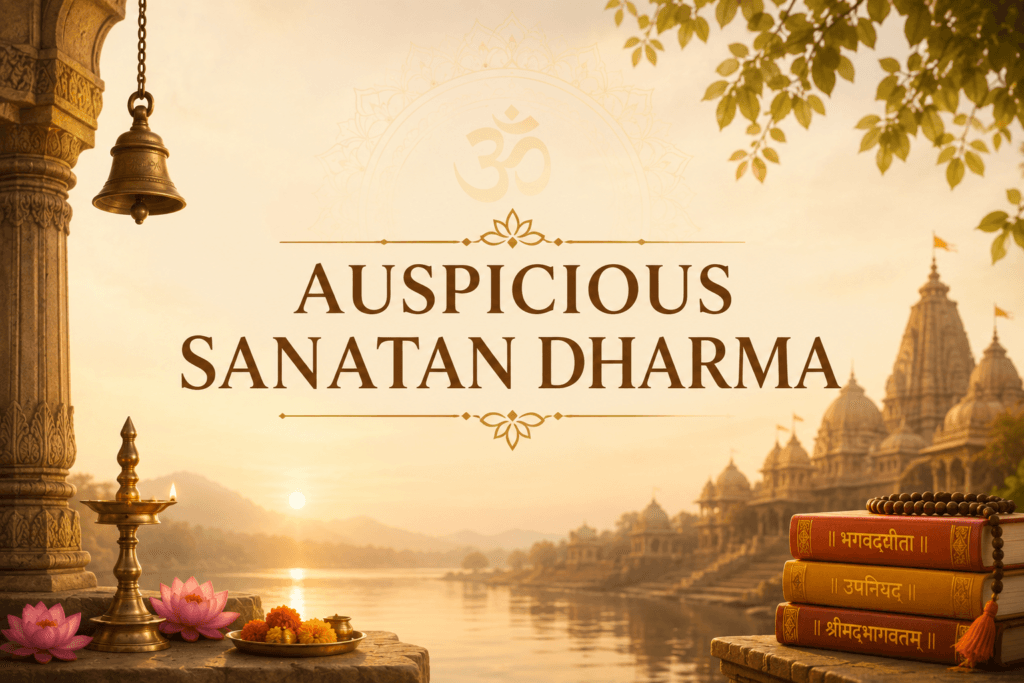
What Does auspicious Sanatan Dharma Really Mean?
Many people mistakenly think Sanatan Dharma is only about worshipping different deities.
In reality, it is much broader.
It teaches that the Divine exists everywhere—in nature, in every living being, and within ourselves.
Sanatan Dharma encourages people to live according to universal values such as:
- Truth (Satya)
- Compassion (Karuna)
- Duty (Dharma)
- Self-control
- Gratitude
- Respect for parents and elders
- Service toward society
- Harmony with nature
Rather than forcing blind belief, it encourages questioning, learning, and personal spiritual growth.
This openness is one reason Sanatan Dharma has survived for thousands of years.
Ancient Wisdom for Modern Problems
Today’s generation faces problems that previous civilizations never imagined.
Anxiety.
Depression.
Loneliness.
Relationship conflicts.
Financial pressure.
Career uncertainty.
Ironically, Sanatan scriptures discussed many of these emotional struggles centuries ago.
The Bhagavad Gita begins with Arjuna experiencing confusion, fear, anxiety, and emotional breakdown on the battlefield.
Lord Krishna does not simply tell him to fight.
Instead, He teaches:
- Self-awareness
- Duty without attachment
- Emotional balance
- Discipline
- Faith
- Inner peace
These lessons are now studied by psychologists, leadership coaches, entrepreneurs, and even corporate organizations across the world.
Dharma Is More Than Religion
One of the biggest misunderstandings is equating Dharma with religion.
Religion often refers to systems of worship.
Dharma refers to living correctly.
For example:
A teacher’s dharma is to educate honestly.
A doctor’s dharma is to heal.
A parent’s dharma is to nurture.
A student’s dharma is to learn sincerely.
Living according to one’s Dharma creates harmony both within the individual and society.
Why Rituals Were Created
Many young people ask:
“Why should we perform pujas?”
“Why light a diya?”
“Why chant mantras?”
“Why perform havan?”
These rituals were never meant to be meaningless customs.
Every ritual has psychological, spiritual, and symbolic significance.
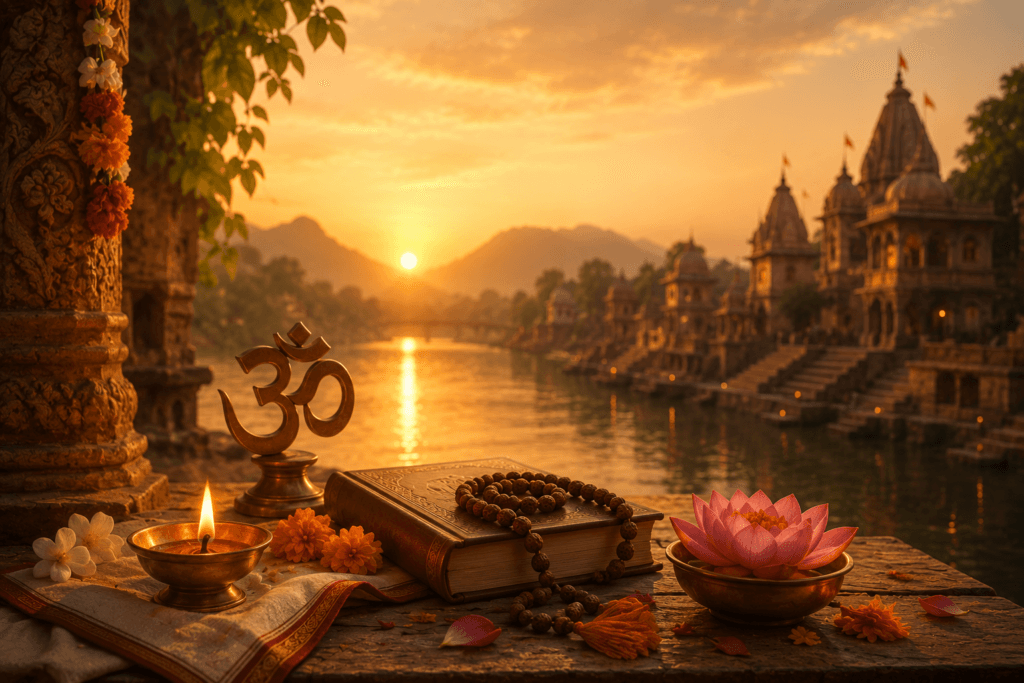
Lighting a diya symbolizes removing ignorance.
Offering water represents gratitude.
The sacred fire in a havan symbolizes purification.
Flowers represent surrender.
Prasad teaches sharing.
Temple bells help focus the wandering mind.
When performed with understanding, rituals become powerful tools for mindfulness and spiritual connection.
The Role of Family in Sanatan Dharma
Sanatan Dharma places immense importance on family.
Parents are considered the first gurus.
Grandparents preserve traditions.
Children learn values through observation rather than lectures.
Festivals, pujas, and family rituals strengthen emotional bonds across generations.
In today’s busy world, these traditions create precious moments where families come together with a shared sense of purpose.
Why Guidance Matters
Many people wish to perform rituals correctly but struggle because they lack proper knowledge.
Some search random videos online.
Others rely on incomplete information from social media.
However, authentic Vedic rituals require proper pronunciation of mantras, understanding of traditions, and guidance from experienced scholars.
This is where qualified pandits play an essential role.
A knowledgeable pandit does much more than perform rituals—they explain their meaning, preserve authenticity, and help families stay connected to Sanatan traditions.
Modern platforms like Panditjee Online make this guidance accessible by connecting devotees with verified, experienced pandits for pujas, havans, Grah Pravesh, Satyanarayan Katha, Shraddh rituals, Vastu Puja, and many other ceremonies. Whether someone lives in India or abroad, they can seek authentic Vedic services without compromising on tradition.
Sanatan Dharma and Science
Many traditions once dismissed as superstition are now being studied scientifically.
Examples include:
- Meditation reducing stress hormones.
- Chanting improving concentration.
- Fasting supporting metabolic health.
- Yoga enhancing physical and mental well-being.
- Havan smoke being studied for its potential antimicrobial effects under specific conditions.
Sanatan Dharma has always emphasized balance between body, mind, and spirit.
The Hidden Meaning Behind Hindu Rituals: More Than Just Tradition
Introduction
In the first part of this series, we explored why Sanatan Dharma continues to guide millions of people even in the modern world. We learned that Sanatan Dharma is much more than a religion—it is a timeless way of living rooted in truth, duty, compassion, and spiritual growth.
Yet, one question often arises, especially among younger generations:
“Why do we perform so many rituals?”
Why do we light a lamp before praying?
Why do we ring a temple bell?
Why do we chant Sanskrit mantras?
Why do we perform Havan, Satyanarayan Katha, Rudrabhishek, Grah Pravesh Puja, or Shraddh rituals?
To someone unfamiliar with Sanatan traditions, these practices may seem repetitive or symbolic. However, every ritual in Sanatan Dharma carries a deeper purpose. They were never created as blind customs. Instead, they are carefully designed practices that help align the mind, body, emotions, and spirit while strengthening our connection with the Divine.
The more we understand their meaning, the more meaningful our spiritual journey becomes.
Rituals: A Language Beyond Words
Every culture has traditions that express love, gratitude, remembrance, or respect. In Sanatan Dharma, rituals serve a similar purpose. They are not simply acts to “please” God but ways to transform the person performing them.
A ritual is a form of communication—between the devotee and the Divine, between generations, and between the visible and the unseen. It encourages us to pause, become mindful, and dedicate time to something greater than ourselves.
For example, when a family gathers for a puja, the experience is not only spiritual. It also strengthens relationships, creates shared memories, and reminds everyone of the values that hold the family together.
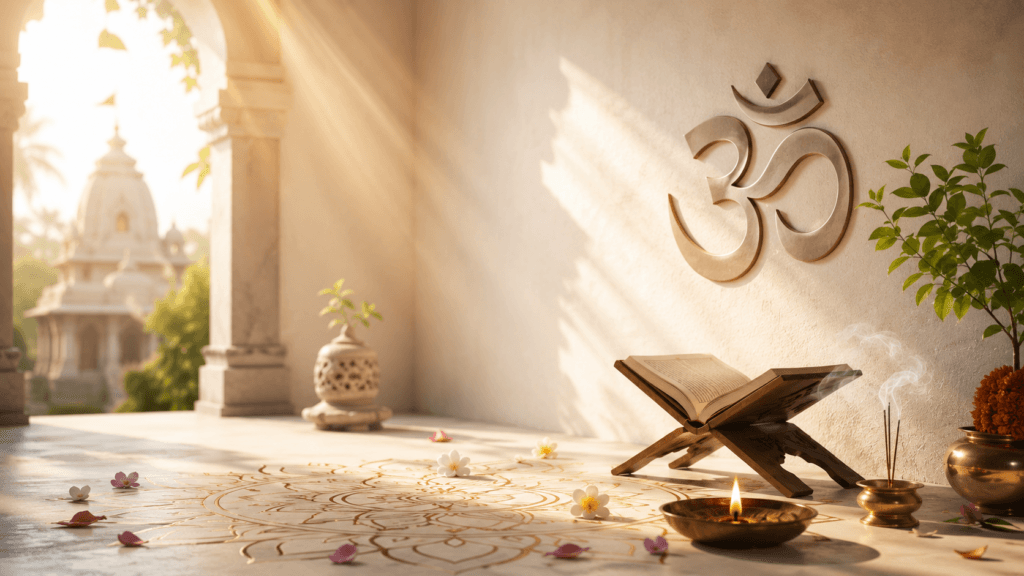
Why Sanskrit Mantras Are Still Relevant
One of the most distinctive aspects of Hindu rituals is the chanting of Sanskrit mantras.
Many people ask, “If I don’t understand Sanskrit, why should I listen to or chant these mantras?”
The answer lies in understanding that mantras are more than words. They are sacred sound patterns preserved through generations. In Sanatan tradition, the correct pronunciation, rhythm, and intonation are considered important because they maintain the integrity of the chant passed down through centuries.
Even when someone does not know every meaning, chanting with devotion can encourage focus, discipline, and a sense of inner calm. Learning the meaning over time can deepen that experience further.
This is why experienced Vedic pandits dedicate years to studying scriptures, pronunciation, and ritual procedures before leading ceremonies.
Why Do We Light a Diya?
The first step in many Hindu rituals is lighting a diya (oil lamp).
At a practical level, it illuminates the space. At a symbolic level, it represents something much greater.
The flame reminds us that knowledge removes ignorance just as light removes darkness.
The wick symbolizes the human ego.
The oil or ghee represents our desires and attachments.
As the lamp burns, it inspires us to gradually replace selfishness with wisdom, compassion, and devotion.
Lighting a diya is therefore not merely a custom—it is a daily reminder to cultivate inner light.
The Significance of Ringing a Temple Bell
Almost every Hindu temple has a bell at its entrance.
People ring it before offering prayers.
Why?
The act serves several purposes.
It marks the transition from the outside world to a sacred space. The sound encourages worshippers to leave behind distractions and become mentally present.
The bell reminds us that prayer is not only about asking for blessings but about becoming fully aware in that moment.
Whether one views it spiritually, culturally, or psychologically, it creates a deliberate pause before worship begins.
Why Remove Footwear Before Entering a Temple?
This practice is often explained as cleanliness, but it also carries symbolic meaning.
Removing footwear represents leaving behind worldly concerns, pride, and distractions before entering a sacred place.
It expresses humility.
Just as we remove dust from our feet, we are encouraged to leave behind negative thoughts before standing before the Divine.
Why Is Prasad So Important?
Prasad is often seen as simply blessed food, but its deeper message is profound.
It teaches gratitude.
Before eating, food is first offered to God, acknowledging that everything we receive ultimately comes from nature and the Divine.
After the offering, everyone shares the same Prasad regardless of wealth, status, profession, or background.
This simple act reinforces equality, generosity, and community.
The Spiritual Meaning of Havan
The sacred fire has held a central place in Vedic traditions for thousands of years.
During a Havan, offerings such as ghee, herbs, and grains are placed into the fire while sacred mantras are chanted.
Fire represents transformation.
Just as fire transforms physical offerings into ash, the ritual symbolizes offering negative qualities—such as anger, greed, fear, and ego—to be transformed into wisdom, purity, and self-control.
Families often perform Havans during occasions like Grah Pravesh, weddings, naming ceremonies, and festivals to mark new beginnings with prayers for peace and prosperity.
Why Is the Kalash Considered Sacred?
The Kalash—a pot filled with water, topped with mango leaves and a coconut—is one of the most recognizable symbols in Hindu rituals.
It represents abundance, life, and creation.
Water signifies purity and the source of life.
The mango leaves symbolize growth and prosperity.
The coconut represents humility and selfless offering.
Together, they remind us that true prosperity is not only material wealth but also purity of thought, health, wisdom, and harmonious relationships.
Why Do We Break a Coconut?
Breaking a coconut is one of the most common ritual practices, yet it is often misunderstood.
The hard outer shell symbolizes the human ego.
The white interior represents purity.
By breaking the coconut before God, devotees symbolically surrender pride, selfishness, and arrogance while aspiring to reveal the purity within.
It is less about the coconut itself and more about the mindset of surrender.
Tulsi: More Than a Sacred Plant
Tulsi holds a special place in many Hindu homes.
It is revered not only for its spiritual significance but also for its cultural and traditional importance.
Daily prayers around the Tulsi plant remind families to care for nature, live with gratitude, and maintain discipline through simple daily practices.
For generations, the Tulsi plant has symbolized purity, devotion, and harmony within the household.
The Importance of the Guru
Sanatan Dharma places immense value on learning from knowledgeable teachers.
The word “Guru” means one who removes darkness through knowledge.
A Guru does not replace God.
Instead, a Guru helps explain scriptures, rituals, philosophy, and spiritual practices correctly.
Similarly, learned Vedic pandits preserve ritual traditions by ensuring ceremonies are performed according to scriptural guidance rather than guesswork or misinformation.
Why Every Sanskar Matters
Sanatan Dharma recognizes that human life passes through different stages, each carrying unique responsibilities.
This is why various Sanskars—or sacred life ceremonies—have traditionally been observed.
These include naming ceremonies, first feeding, education, marriage, and remembrance rituals.
Rather than treating life’s milestones as purely social events, these ceremonies encourage families to begin each new chapter with gratitude, blessings, and a sense of responsibility.
Festivals: Celebrations with a Deeper Purpose
Festivals are often associated with sweets, decorations, and celebrations.
But their spiritual purpose goes much deeper.
Every festival offers an opportunity to reflect on values and renew our commitment to righteous living.
Diwali reminds us that light overcomes darkness.
Janmashtami celebrates devotion and divine wisdom.
Mahashivratri encourages meditation and self-discipline.
Navratri honours the strength of the Divine Feminine.
Ganesh Chaturthi teaches us to begin new journeys with humility and wisdom.
When understood this way, festivals become opportunities for personal growth rather than only annual celebrations.
Why Authentic Guidance Matters Today
In today’s digital age, information about rituals is everywhere.
A short social media video may explain a puja in a few minutes.
An online article may provide a simplified version of a ceremony.
While these resources can spark curiosity, many important details—such as the sequence of rituals, proper pronunciation of mantras, regional traditions, and scriptural context—often require guidance from trained practitioners.
Experienced pandits spend years studying Vedic texts, ritual procedures, and sacred recitation. Their role is not only to perform ceremonies but also to help families understand the significance behind them and preserve traditions with authenticity.
Preserving Tradition in a Digital World
Modern lifestyles have changed how families access spiritual guidance.
People frequently relocate for work, live away from their hometowns, or have limited time to arrange traditional ceremonies. Finding a knowledgeable and reliable pandit can sometimes be challenging, especially for families living outside India.
Digital platforms have helped bridge this gap by making it easier to connect with verified Vedic scholars while respecting traditional practices.
Services such as Panditjee Online enable families to book experienced pandits for occasions including Grah Pravesh Puja, Satyanarayan Katha, Rudrabhishek, Griha Shanti, Havan, Wedding Rituals, Naamkaran Sanskar, Shraddh, Vastu Puja, and many other Vedic ceremonies. This combines the convenience of modern technology with the authenticity of age-old traditions, helping devotees perform rituals with proper guidance wherever they are.
Living Sanatan Dharma Every Day: Practical Lessons for a Peaceful and Purposeful Life
How do we actually live Sanatan Dharma every day?
Many people assume spirituality is limited to temples, festivals, or special occasions. They believe one needs hours of meditation, extensive scriptural knowledge, or complete renunciation to follow Sanatan Dharma.
But the truth is far simpler.
Sanatan Dharma is meant to be lived—not only worshipped.
It is reflected in the way we speak, the way we earn, the way we treat our parents, how we raise our children, how honestly we perform our work, and how we respond when life becomes difficult.
Every ordinary day offers an opportunity to practice extraordinary values.
Dharma Begins with Daily Choices
People often ask,
“What is my Dharma?”
Many expect a complicated spiritual answer.
Yet Sanatan scriptures repeatedly remind us that Dharma begins with fulfilling our responsibilities sincerely.
A student’s Dharma is to learn with dedication.
A parent’s Dharma is to nurture with love.
A teacher’s Dharma is to educate honestly.
A doctor’s Dharma is to heal selflessly.
A business owner’s Dharma is to conduct work ethically.
Following Dharma does not mean becoming perfect.
It means making the right choice whenever possible, even when it is difficult.
Societies become stronger when individuals perform their duties with integrity rather than expecting others to change first.
Karma: Understanding Cause and Effect
Among the most well-known teachings of Sanatan Dharma is the principle of Karma.
Unfortunately, Karma is often misunderstood as immediate reward or punishment.
Its meaning is much deeper.
Every thought, every word, and every action creates an effect.
Kindness encourages kindness.
Dishonesty damages trust.
Anger spreads conflict.
Compassion builds relationships.
The law of Karma reminds us that our actions shape both our character and the world around us.
Instead of living with fear, Karma inspires responsibility.
Rather than asking,
“Why is this happening to me?”
Sanatan Dharma encourages us to ask,
“What can I do today that creates a better tomorrow?”
Success Without Losing Your Values
Modern life often defines success through wealth, position, and recognition.
Sanatan Dharma does not reject success.
Instead, it teaches that success should never come at the cost of honesty, compassion, or righteousness.
The Bhagavad Gita reminds us to perform our duties with dedication while remaining detached from excessive attachment to outcomes.
This teaching is especially valuable today.
Work hard.
Dream big.
Build businesses.
Pursue excellence.
But do not sacrifice your values in the process.
A peaceful mind is one of life’s greatest achievements.
Why Gratitude Changes Everything
Most people begin their day by checking notifications.
Sanatan Dharma suggests beginning with gratitude instead.
Gratitude shifts attention from what is missing to what is already present.
Being thankful for parents, family, health, food, education, and opportunities creates a positive mindset before the day even begins.
Simple daily prayers are not only acts of worship.
They are moments of reflection that remind us how much we have received.
A grateful heart naturally becomes more patient, generous, and peaceful.
The Importance of Seva
One of the most beautiful teachings of Sanatan Dharma is Seva, or selfless service.
Helping someone without expecting recognition purifies the mind.
Seva does not always require money.
It can be:
Helping an elderly neighbour.
Teaching someone without charge.
Feeding animals.
Supporting someone emotionally.
Donating food.
Planting trees.
Volunteering in community work.
When service is performed with humility, it becomes worship in action.
Family: The First School of Dharma
Sanatan Dharma has always considered the family to be the foundation of society.
Children learn far more from observing adults than from listening to lectures.
When parents show respect to elders, children naturally learn respect.
When families perform simple prayers together, children understand the importance of faith.
When grandparents share stories from the Ramayana, Mahabharata, or Bhagavad Gita, values are passed from one generation to the next.
These traditions create identity and belonging.
In today’s busy world, even spending a few minutes together in prayer or conversation can strengthen family bonds.
Raising Children with Values
Modern education prepares children for careers.
Sanatan Dharma reminds us to also prepare them for life.
Children should learn:
Honesty.
Compassion.
Respect.
Discipline.
Patience.
Responsibility.
Gratitude.
These values are best taught through everyday actions rather than instructions alone.
Festivals, family rituals, temple visits, and stories from Hindu scriptures become meaningful opportunities to teach ethics naturally.
Finding Peace in the Digital Age
Technology has transformed our lives.
It has made communication easier, learning faster, and services more accessible.
But it has also increased distractions.
Constant notifications leave little time for silence or reflection.
Sanatan Dharma encourages balance.
Spending even ten minutes each day in prayer, meditation, or silent contemplation helps calm the mind.
Many people discover that reducing screen time before sleep and beginning the day with a few moments of gratitude improves emotional well-being.
The goal is not to reject technology.
It is to ensure technology serves us rather than controls us.
Festivals Are Opportunities to Reflect
Every Hindu festival celebrates more than history.
It celebrates timeless values.
Diwali reminds us to remove the darkness of ignorance.
Raksha Bandhan celebrates responsibility and love.
Guru Purnima honours knowledge.
Navratri inspires courage.
Janmashtami teaches devotion and wisdom.
Ganesh Chaturthi reminds us to begin every journey with humility.
Instead of treating festivals as social events alone, Sanatan Dharma encourages us to ask,
“What value can I bring into my life from this celebration?”
Why Homes Need Spiritual Spaces
A home becomes peaceful not because of its size but because of the atmosphere within it.
A small prayer corner reminds family members to pause, reflect, and express gratitude.
Regular prayers, bhajans, or simply lighting a diya each evening create moments of calm amidst busy schedules.
Many families also choose to perform annual rituals such as Griha Shanti Puja, Satyanarayan Katha, or Lakshmi Puja to seek blessings and mark important milestones with devotion.
The Importance of Sacred Ceremonies
Life is filled with important moments.
The birth of a child.
Moving into a new home.
Marriage.
Starting a business.
Remembering ancestors.
Sanatan Dharma teaches us to begin these milestones with prayer because spirituality reminds us that every new beginning carries both responsibility and gratitude.
Ceremonies such as Naamkaran Sanskar, Annaprashan, Mundan, Upanayanam, Vivah Sanskar, Grah Pravesh, Vastu Puja, and Shraddh are not simply traditions.
They help families pause, seek blessings, and acknowledge the deeper significance of life’s journey.
Why Authentic Guidance Still Matters
In today’s world, information is available within seconds.
However, knowledge and wisdom are not always the same.
Watching a short online video may introduce a ritual.
Reading an article may explain basic steps.
But authentic Vedic ceremonies require proper understanding, correct mantra recitation, and guidance rooted in tradition.
Experienced pandits dedicate years to studying scriptures, rituals, Sanskrit pronunciation, and spiritual disciplines.
Their guidance ensures that ceremonies are performed respectfully and meaningfully while also helping families understand the significance behind each practice.
Bridging Ancient Traditions with Modern Convenience
Modern lifestyles often make it difficult for families to organize traditional ceremonies.
People relocate frequently, live in different cities or countries, or simply struggle to find experienced and trustworthy pandits.
Fortunately, technology can also become a means of preserving tradition.
Platforms like Panditjee Online connect devotees with verified and experienced Vedic pandits for a wide range of ceremonies, including Grah Pravesh Puja, Satyanarayan Katha, Rudrabhishek, Havan, Vastu Puja, Marriage Rituals, Naamkaran Sanskar, Shraddh Karma, Griha Shanti, and many other Vedic services.
Beyond booking a ceremony, such platforms help families stay connected with authentic traditions while embracing the convenience of modern living. Whether someone lives in India or abroad, access to knowledgeable guidance makes it easier to observe rituals with confidence and understanding.
Sanatan Dharma Is a Journey, Not a Destination
One of the greatest strengths of Sanatan Dharma is that it does not expect perfection.
It encourages continuous learning.
Every prayer teaches humility.
Every mistake becomes an opportunity for growth.
Every act of kindness strengthens character.
Every challenge becomes a lesson.
Sanatan Dharma reminds us that spiritual progress is measured not by outward appearance but by inner transformation.
A person who becomes more patient, more truthful, more compassionate, and more self-aware is already walking the path of Dharma.
Final Thoughts
For thousands of years, Sanatan Dharma has guided humanity through changing civilizations, evolving societies, and countless challenges. Its teachings have remained relevant because they address timeless human needs—the search for peace, purpose, truth, and meaningful relationships.
Its wisdom does not ask us to abandon modern life. Instead, it invites us to bring values such as honesty, gratitude, discipline, compassion, and selfless service into our everyday routines.
Whether we are students, professionals, entrepreneurs, homemakers, or retirees, the principles of Sanatan Dharma can help us make wiser decisions, strengthen our families, and live with greater balance.
As life becomes busier, preserving these traditions requires both knowledge and accessibility. Trusted platforms like Panditjee Online play an important role by connecting devotees with verified Vedic pandits for authentic ceremonies, helping families celebrate life’s milestones while staying rooted in Sanatan values.
In the end, Sanatan Dharma is not defined only by temples, rituals, or festivals. It is reflected in how we live, how we serve, how we love, and how we uphold righteousness every single day.
Because when Dharma becomes a way of life, every action becomes an offering, every home becomes a place of peace, and every individual contributes to a more compassionate and harmonious world.