Introduction
The Difference Between Havan, Homam and Yagya is a topic that often creates confusion among devotees. These sacred fire rituals are deeply rooted in Sanatan Dharma and have been performed for thousands of years to seek divine blessings, remove obstacles, and promote peace and prosperity. Although many people use these three terms interchangeably, each ritual has its own significance, purpose, method, and spiritual importance.
Understanding the Difference Between Havan, Homam and Yagya helps devotees perform the right ritual for the right purpose. Whether you are planning a Griha Pravesh, marriage ceremony, Navagraha Shanti, Rudra Abhishek, or any other religious event, knowing these differences allows you to appreciate the depth of Vedic traditions and make informed spiritual decisions.
In Hinduism, Agni (the sacred fire) is regarded as the divine messenger who carries prayers and offerings to the deities. Every offering made into the sacred fire is believed to purify the surroundings, elevate spiritual consciousness, and invoke divine grace. While the basic element of fire is common in Havan, Homam, and Yagya, their scale, procedures, mantras, and objectives differ significantly.
This guide explores these sacred rituals in detail, helping you understand their origins, meanings, similarities, and unique characteristics.
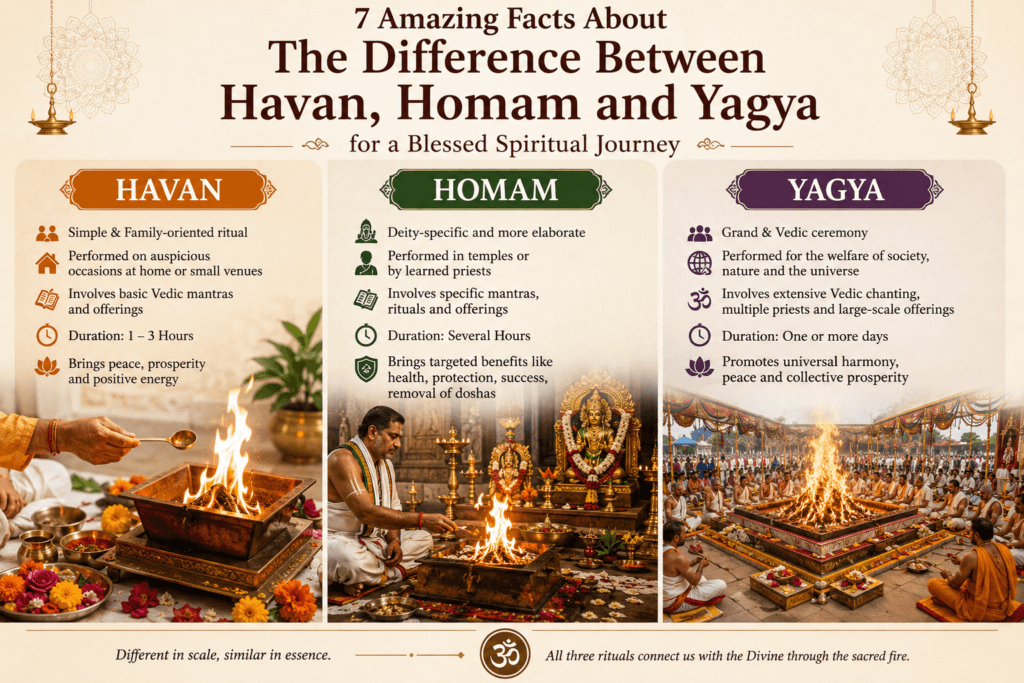
What Is the Difference Between Havan, Homam and Yagya?
Fire occupies a special place in Vedic philosophy. It is considered one of the five essential elements of nature and symbolizes purity, transformation, wisdom, and divine energy. The Rig Veda begins with prayers to Lord Agni, highlighting the importance of fire in connecting human beings with the divine.
During a fire ritual, sacred offerings such as ghee, herbs, grains, wood, sesame seeds, and medicinal plants are offered into the holy fire while chanting Vedic mantras. The belief is that Agni carries these offerings to the respective deities, who bless the devotees with health, prosperity, wisdom, peace, and spiritual growth.
Although all three rituals involve sacred fire, they differ in purpose, complexity, and tradition.
1.Difference Between Havan, Homam and Yagya: Understanding Havan
Havan is one of the most commonly performed fire rituals in Hindu households. It is generally simple, devotional, and suitable for families wishing to seek blessings on auspicious occasions.
The word “Havan” originates from the Sanskrit root “Hu,” meaning “to offer” or “to sacrifice.” During a Havan, offerings known as Ahuti are made into the sacred fire while chanting specific Vedic mantras dedicated to different deities.
Unlike elaborate Vedic ceremonies, a Havan can usually be performed at homes, temples, offices, or community halls. It does not necessarily require a large number of priests, making it one of the most accessible forms of worship.
Common Occasions for Havan
A Havan is often performed during:
- Griha Pravesh
- Marriage ceremonies
- Satyanarayan Katha
- Navratri
- Ganesh Puja
- Lakshmi Puja
- Birthday celebrations
- Office inaugurations
- Vastu Shanti
- Educational milestones
Every Havan includes:
- Sacred fire (Agni)
- Havan Kund
- Ghee
- Samidha (holy wood)
- Havan Samagri
- Vedic mantras
- Offerings
The atmosphere created during a Havan is believed to purify both the surroundings and the minds of the participants.
Spiritual Importance of Havan
A Havan is considered a means of offering gratitude to the Divine while seeking blessings for happiness and prosperity.
It symbolizes:
- Purification of negative energies
- Removal of obstacles
- Mental peace
- Spiritual discipline
- Harmony within the family
- Positive vibrations
- Prosperity and abundance
Many families perform Havans regularly because they believe these rituals strengthen both spiritual and emotional well-being.
2. Difference Between Havan, Homam and Yagya: Understanding Homam
Homam is another sacred fire ritual found primarily in South Indian Vedic traditions. While it resembles a Havan in many ways, it generally follows stricter Vedic procedures and involves more elaborate rituals.
The Sanskrit word “Homa” or “Homam” also means making sacred offerings into the divine fire. However, Homams are often conducted according to Agama Shastra or specific Vedic traditions followed by temples and experienced priests.
Homams usually include:
- Advanced Vedic chanting
- Specific deity invocation
- Kalasha Sthapana
- Sankalpam
- Detailed rituals
- Sacred offerings
- Purnahuti
Many temples conduct Homams throughout the year for devotees seeking blessings from specific deities.
Popular Types of Homam
Different Homams are dedicated to different deities and spiritual purposes.
Some well-known Homams include:
Ganapathi Homam
Performed before beginning new ventures to remove obstacles and invite success.
Sudarshana Homam
Conducted for divine protection and removal of negative influences.
Ayush Homam
Performed for children’s health, longevity, and overall well-being.
Chandi Homam
Dedicated to Goddess Durga for strength, protection, and victory over challenges.
Maha Mrityunjaya Homam
Offered to Lord Shiva for health, protection, and inner peace.
Navagraha Homam
Performed to balance planetary influences and seek blessings from the nine celestial planets.
Each Homam follows a specific set of Vedic rules depending on the deity being worshipped.

Spiritual Significance of Homam
Homam is considered a highly disciplined spiritual practice.
It aims to:
- Invoke specific deities
- Strengthen positive energies
- Remove karmic obstacles
- Enhance spiritual growth
- Promote physical and mental well-being
- Restore planetary balance
- Increase devotion
Many devotees participate in Homams during important life events or when seeking divine guidance.
3. Difference Between Havan, Homam and Yagya: Understanding Yagya
Yagya is regarded as one of the most profound and comprehensive forms of Vedic worship.
The Sanskrit word “Yaj” means worship, sacrifice, reverence, and offering.
Unlike a simple household ritual, a Yagya often represents a large-scale spiritual ceremony involving multiple priests, extensive Vedic chanting, elaborate offerings, and participation by an entire community.
Historically, kings, sages, and spiritual leaders performed Yagyas for the welfare of society, peace, prosperity, rainfall, agricultural abundance, and spiritual upliftment.
Today, Yagyas continue to be organized during major religious events and temple festivals.
Types of Yagyas
Several important Yagyas have been mentioned in Hindu scriptures.
Ashwamedha Yagya
Historically performed by emperors to establish sovereignty and seek divine blessings.
Rajasuya Yagya
Conducted by kings before assuming imperial leadership.
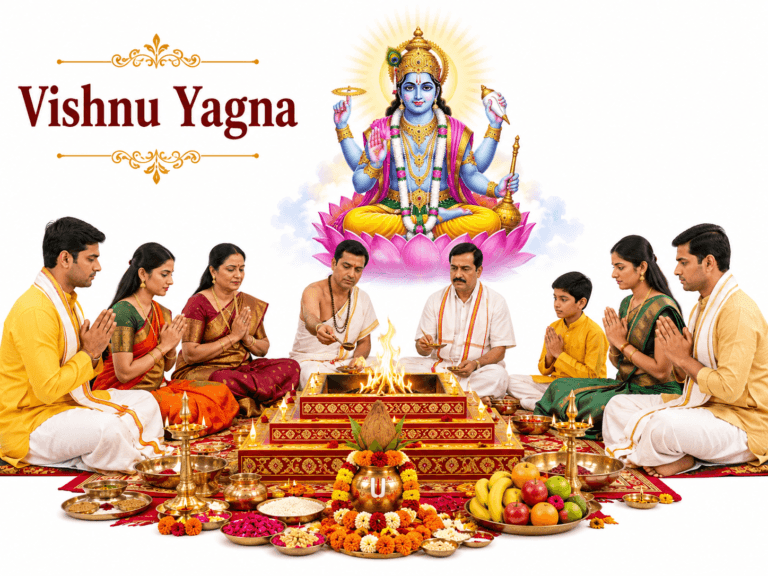
Vishnu Yagya
Dedicated to Lord Vishnu for universal welfare and spiritual growth.
Rudra Yagya
Performed to seek Lord Shiva’s blessings for peace, protection, and prosperity.
Gayatri Yagya
Focused on spiritual purification and higher consciousness.
Maha Yagya
Large community ceremonies performed for world peace and collective well-being.
These Yagyas often continue for several hours or even multiple days.
Importance of Yagya in Society
Unlike personal rituals, Yagyas are often performed for collective welfare.
They are believed to benefit:
- Families
- Communities
- Society
- Nature
- Agriculture
- Environment
- Spiritual harmony
Ancient scriptures frequently describe Yagya as an act of selfless sacrifice that contributes to universal balance.
4. The Sacred Role of Fire in All Three Rituals
Although Havan, Homam, and Yagya differ in many aspects, they all recognize Agni as the divine messenger between humans and the gods.
Fire symbolizes:
- Purity
- Transformation
- Divine knowledge
- Sacrifice
- Inner illumination
- Spiritual awakening
Every offering made into the sacred fire represents surrendering ego, desires, negativity, and ignorance while inviting wisdom, prosperity, and divine blessings.
The smoke generated through medicinal herbs, ghee, and sacred woods has traditionally been regarded as spiritually purifying, creating an atmosphere conducive to prayer and meditation.
5. Sacred Offerings Used During Fire Rituals
Although the rituals vary, many traditional offerings remain common.
These include:
- Pure cow ghee
- Mango wood
- Sandalwood
- Dry coconut
- Black sesame
- Rice
- Barley
- Herbs
- Camphor
- Havan Samagri
- Betel nuts
- Dry fruits
- Lotus seeds
Each offering carries symbolic meaning and is selected according to the purpose of the ceremony.
The mantras recited during the ritual are equally important, as they are believed to energize the offerings before they are placed into the sacred fire.
6. Participation of Devotees
Havans encourage active participation from family members. Devotees usually sit around the sacred fire, offer Ahutis, chant mantras, and receive blessings together.
Homams are primarily conducted by trained priests, although devotees actively participate during Sankalpam, offerings, and the final Purnahuti.
Yagyas often involve an entire community. While priests perform the main rituals, large numbers of devotees attend the ceremony, listen to Vedic chanting, participate in prayers, and receive blessings at its conclusion.
7. Spiritual Impact and Benefits
Each ritual offers profound spiritual benefits, but their emphasis differs.
A Havan promotes peace, positivity, family harmony, prosperity, and purification of the home environment.
A Homam focuses on specific spiritual goals such as health, protection, success, planetary balance, or devotion to a chosen deity.
A Yagya symbolizes collective welfare, universal harmony, selfless service, and the preservation of Vedic traditions. It reminds participants that true spirituality extends beyond personal desires toward the well-being of society and nature.
Which Ritual Should You Choose?
Choosing the right ritual depends entirely on your spiritual objective.
A Havan is ideal when celebrating happy milestones, beginning a new phase of life, or seeking blessings for the household.
A Homam is more appropriate when guidance from Vedic astrology suggests a specific remedy or when you wish to worship a particular deity for health, protection, prosperity, or spiritual growth.
A Yagya is suitable for temple celebrations, community welfare, religious institutions, and large spiritual gatherings dedicated to collective well-being.
Instead of considering one ritual superior to another, it is better to understand that each serves a unique purpose within Hindu tradition.
Common Misconceptions
Havan and Homam Are Exactly the Same
Although they share similarities, Homam generally follows more elaborate Vedic procedures and deity-specific traditions.
Only Priests Benefit From Performing These Rituals
The purpose of every fire ritual is to benefit the devotees through prayer, devotion, discipline, and divine blessings.
Yagya Is Only Meant for Kings
Ancient kings performed grand Yagyas, but today temples, spiritual organizations, and communities continue this tradition for the welfare of society.
These Rituals Are Relevant Only During Festivals
Fire rituals may be performed throughout the year for weddings, Griha Pravesh, Vastu Shanti, health, business, education, family harmony, and numerous other occasions.
How to Prepare for a Fire Ritual
To receive the fullest spiritual benefit, devotees should prepare themselves with sincerity and devotion.
Some helpful preparations include:
- Wear clean and traditional attire.
- Arrive with a peaceful state of mind.
- Follow the priest’s guidance carefully.
- Participate actively in mantra chanting.
- Offer prayers with faith rather than formality.
- Avoid distractions during the ceremony.
- Maintain respect for the sacred fire.
- Receive Prasad with gratitude.
Spiritual rituals become more meaningful when performed with genuine devotion rather than merely following tradition.
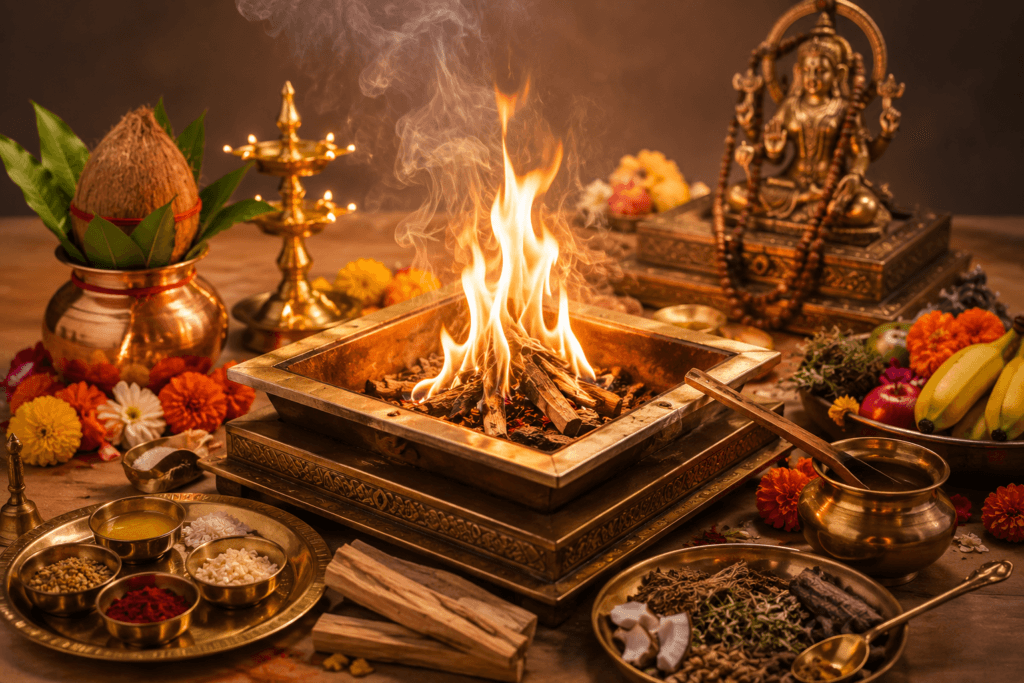
Quick Comparison Between Havan, Homam, and Yagya
| Feature | Havan | Homam | Yagya |
|---|---|---|---|
| Primary Purpose | Family blessings | Deity-specific worship | Universal welfare |
| Scale | Small | Medium to Large | Large |
| Venue | Homes & Temples | Temples & Ritual Spaces | Large Temple Grounds |
| Duration | 1–3 Hours | Several Hours | One or More Days |
| Priests Required | One or Two | Multiple | Several Experienced Priests |
| Complexity | Moderate | High | Very High |
| Participation | Family | Family & Priests | Community |
Perform Authentic Vedic Rituals with PanditjeeOnline
Whether you wish to perform a Havan, Homam, or Yagya, choosing knowledgeable and experienced priests is essential to maintaining the authenticity of these sacred traditions. At PanditjeeOnline, we connect devotees with verified Vedic pandits who perform rituals according to traditional scriptures and proper Vedic procedures.
From Griha Pravesh Havan, Marriage Havan, Navagraha Homam, Ganapathi Homam, Rudra Homam, and Vishnu Yagya to many other religious ceremonies, our experienced pandits guide you through every step with devotion and precision. We also assist with selecting the appropriate ritual based on your occasion, family traditions, and spiritual requirements.
With simple online booking, trusted priests, transparent service, and authentic Vedic practices, PanditjeeOnline helps you perform every sacred ceremony with faith, confidence, and divine blessings.
Book your next Havan, Homam, or Yagya with PanditjeeOnline and experience the timeless wisdom of Sanatan Dharma through authentic Vedic rituals.
requently Asked Questions
Can a Havan be performed at home?
Yes. Havans are commonly conducted at homes for occasions such as Griha Pravesh, marriages, birthdays, Vastu Shanti, and festivals.
Is Homam only practiced in South India?
While Homams are especially popular in South Indian traditions, they are now performed across India and around the world by trained Vedic priests.
Does every Yagya require many priests?
Not always. The number of priests depends on the type of Yagya and the scriptural requirements associated with that ceremony.
Are women allowed to participate?
Yes. Women actively participate in Havans, Homams, and Yagyas according to family traditions and the guidance of the officiating priest.
What is Purnahuti?
Purnahuti is the final sacred offering made into the fire. It symbolizes the successful completion of the ritual and the surrender of all prayers to the Divine.
Conclusion
Understanding the Difference Between Havan, Homam and Yagya allows devotees to appreciate the richness of Sanatan Dharma and perform these sacred rituals with greater awareness. Although all three ceremonies revolve around the worship of Agni, each has a distinct purpose, tradition, and spiritual significance.
A Havan nurtures family harmony and auspicious beginnings. A Homam offers focused worship and spiritual remedies dedicated to specific deities. A Yagya represents the highest spirit of collective prayer, selfless sacrifice, and universal welfare.
Rather than viewing these rituals as separate paths, they should be understood as complementary expressions of Vedic wisdom. Each ceremony strengthens devotion, purifies the mind, and deepens our connection with the Divine when performed with sincerity and faith.
By learning their unique characteristics, devotees can choose the most appropriate ritual for every important milestone in life while preserving the timeless traditions passed down through generations.