Introduction
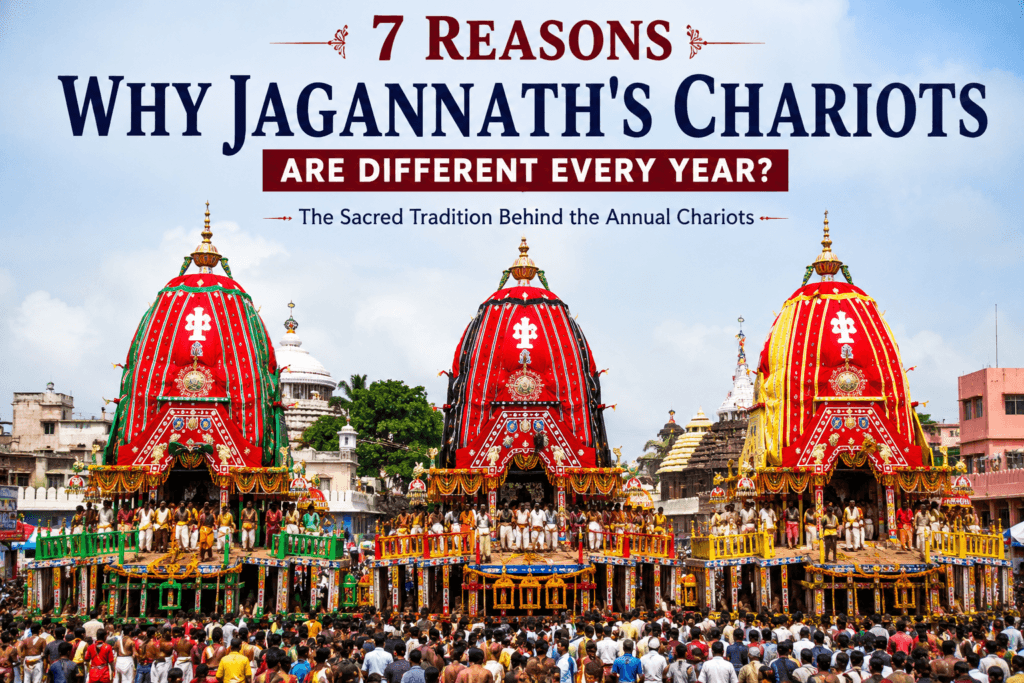
Every year, millions of devotees gather in Puri to witness the magnificent Rath Yatra of Lord Jagannath. One question often fascinates devotees and visitors alike: Why are Jagannath’s Chariots Different Every Year?
Unlike most temple chariots that are preserved for generations, the three grand chariots of Lord Jagannath, Lord Balabhadra, and Devi Subhadra are built completely from scratch every year. This centuries-old tradition is not just about craftsmanship—it reflects deep spiritual beliefs, ancient rituals, and a philosophy of renewal.
In this blog, we’ll explore 7 important reasons why Jagannath’s Chariots Different Every Year and uncover the timeless significance behind this unique tradition.
1. Every Chariot Represents Renewal and New Beginnings
The primary reason Jagannath’s Chariots Different Every Year is the belief that everything in the universe follows the cycle of creation, preservation, and renewal.
Building fresh chariots each year symbolizes:
- New beginnings
- Purity
- Continuous devotion
- The impermanence of material things
Just as nature renews itself every season, Lord Jagannath’s divine journey begins with newly crafted chariots.
2. Ancient Rituals Require Fresh Wooden Chariots
The construction is not merely a practical activity—it is considered a sacred ritual.
Every year:
- Specific auspicious dates are selected.
- Temple priests perform special prayers before construction begins.
- Every stage of the building process follows centuries-old Vedic traditions.
This is one of the biggest reasons Jagannath’s Chariots Different Every Year continues to remain an unbroken custom.
3. Special Sacred Wood Is Used Every Year
The wood is never reused.
Instead, specially selected trees are identified from protected forests following traditional guidelines.
Only particular species of wood are permitted, including:
- Phassi
- Dhausa
- Asana
- Simili
The trees are chosen only after religious ceremonies and divine permission through temple traditions.
This makes every year’s chariots spiritually unique.
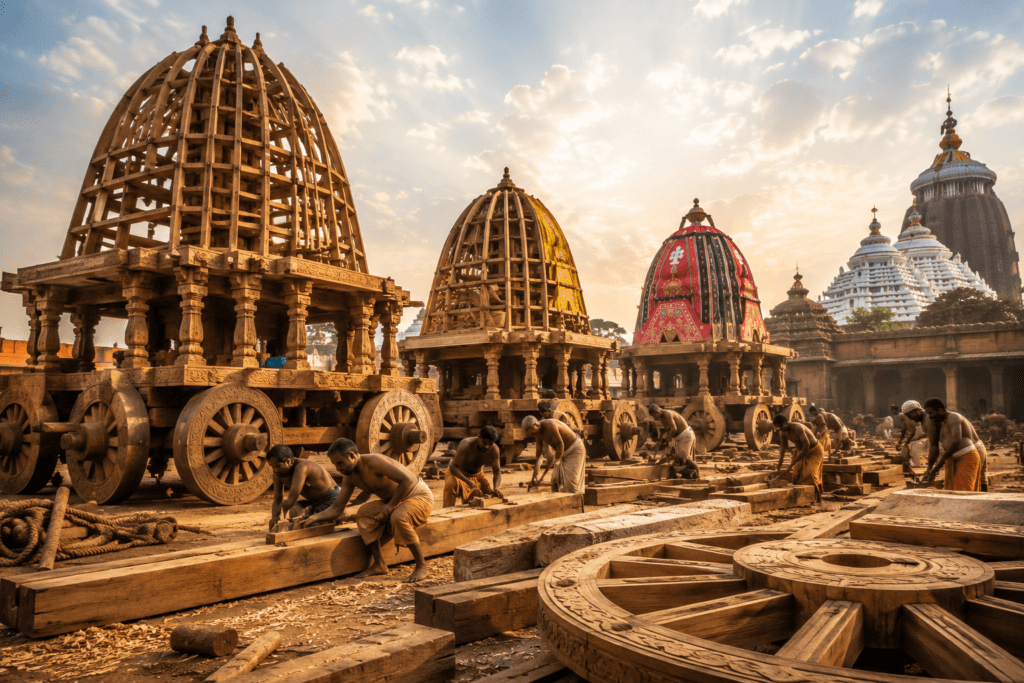
4. Hundreds of Skilled Artisans Build Them by Hand
The construction begins on Akshaya Tritiya.
Generations of hereditary carpenters, known as Maharanas, dedicate themselves exclusively to building the chariots.
Without modern machinery, every wheel, beam, pillar, and decorative element is handcrafted according to ancient measurements preserved for centuries.
Although the dimensions remain fixed, each year’s handcrafted construction naturally creates unique details.
5. Every Chariot Has Its Own Identity
The three chariots are never identical.
Each belongs to a different deity:
Nandighosha
- Lord Jagannath
- 16 wheels
- Yellow and red canopy
Taladhwaja
- Lord Balabhadra
- 14 wheels
- Green and red canopy
Darpadalana
- Devi Subhadra
- 12 wheels
- Black and red canopy
Each chariot carries its own symbols, guardians, horses, and flag, making every Rath Yatra visually distinctive.
6. Decorations Change Every Year
Although traditional patterns remain the same, every Rath Yatra introduces newly prepared:
- Cloth coverings
- Decorative paintings
- Wooden carvings
- Floral arrangements
- Sacred flags
- Rope decorations
These handcrafted details ensure that devotees witness a fresh and vibrant appearance every year.7. The Chariots Teach the Philosophy of Impermanence
Perhaps the deepest reason Jagannath’s Chariots Different Every Year lies in Hindu philosophy.
The annual rebuilding reminds devotees that:
- Nothing material lasts forever.
- Renewal is part of life.
- Faith remains eternal even when physical forms change.
- Spiritual growth comes through accepting change.
The chariots become a beautiful reminder that while wood, cloth, and decorations may change, devotion to Lord Jagannath remains constant.
The Grand Construction Process
Each year, nearly:
- Thousands of wooden components are crafted.
- Hundreds of artisans participate.
- Construction takes several weeks.
- Every measurement follows sacred temple scriptures.
- Rituals accompany every major milestone.
This remarkable process has continued uninterrupted for hundreds of years, making Jagannath Rath Yatra one of the world’s most extraordinary living traditions.
Conclusion
The answer to Why Are Jagannath’s Chariots Different Every Year? goes far beyond architecture or tradition. It is a powerful expression of renewal, devotion, craftsmanship, and spirituality.
From the careful selection of sacred wood to the skilled hands of hereditary artisans and the deep symbolism behind every wheel and decoration, each year’s chariots represent a fresh offering to Lord Jagannath.
As millions gather to pull the divine chariots during Rath Yatra, they become part of a timeless tradition that celebrates faith, unity, and the eternal journey of life.
If you’ve ever wondered why Jagannath’s Chariots Different Every Year, the answer lies in a beautiful blend of sacred rituals, ancient wisdom, and unwavering devotion that has inspired generations for centuries.
FAQs
1. Why are Jagannath’s chariots different every year?
The chariots are rebuilt annually to symbolize renewal, purity, and the continuous cycle of creation according to Hindu tradition.
2. Are the old chariots reused?
No. New chariots are constructed every year using freshly selected sacred wood, following age-old rituals.
3. When does the construction of the chariots begin?
Construction traditionally begins on Akshaya Tritiya, an auspicious day in the Hindu calendar.
4. Who builds Lord Jagannath’s chariots?
The chariots are built by hereditary artisans known as Maharanas, who have preserved this sacred craft for generations.
5. What are the names of the three chariots?
The three chariots are Nandighosha (Lord Jagannath), Taladhwaja (Lord Balabhadra), and Darpadalana (Devi Subhadra).
6. What is the spiritual meaning behind rebuilding the chariots?
The annual rebuilding reflects the Hindu philosophy of renewal, impermanence, and the idea that while material forms change, faith and devotion remain eternal.